The Customer Success Cost Trap: Why High-Touch CS Hides Product Friction
Why scaling a high-touch Customer Success team can mask product problems and squeeze SaaS margins, and the telemetry-led retention model that replaces it.
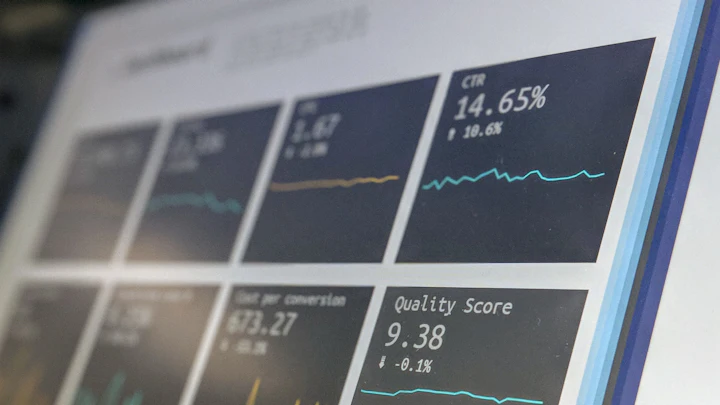
Photo: Stephen Dawson on Unsplash
State of Marketing Dispatch #101 · Executive Intelligence Briefing
Across venture-backed B2B software companies, private equity operating reviews and SaaS leadership teams, one expensive operating habit is coming under scrutiny in 2026: the ever-growing, high-touch Customer Success (CS) department.
Between 2022 and 2025, as new-logo acquisition slowed, boardrooms issued the same mandate: protect the installed base, stop churn. Many founders responded by hiring more Customer Success Managers (CSMs):
- Cutting account-to-CSM ratios from around 1:80 to 1:25.
- Mandating fortnightly "check-in calls" with every mid-market and enterprise customer.
- Spending dozens of unbillable hours per account on 35-slide Quarterly Business Review (QBR) decks.
- Turning CSMs into on-demand operators who format CSV files, configure integrations and walk users through complex workflows.
The result is a model that feels safe but quietly works against the business.
I. The autopsy: the Customer Success margin squeeze
CS is now a meaningful line in the cost base. SaaS Capital's 2026 Spending Benchmarks, a survey of more than 1,000 private B2B SaaS companies, puts the median spend on customer support and customer success at 9% of ARR, up from 8% a year earlier. Customer support typically sits inside cost of goods sold. Aleph's 2026 gross margin benchmarks list it as a COGS component and set a good software gross margin at 80% or more. The more CS behaves like an unbilled services desk, the harder that benchmark becomes to hold.
The "human band-aid" masks product problems. High-touch CSMs act as shock absorbers for broken product experiences. When an enterprise user hits an unintuitive screen, a failing webhook or a confusing permission setting, they don't file a ticket. They message their CSM, who fixes it for them. The customer is rescued, but the product team never sees the friction, and the core software stays brittle.
Health scores look green until they don't. Many CS dashboards blend logins, meeting attendance and sentiment into a single score. Perspective AI's 2026 guide to health scoring warns about "vanity green": scores that stay green because usage looks fine while sentiment quietly collapses. It also notes, citing Gainsight's 2025 benchmark, that 74% of SaaS companies still rely on manual or semi-manual health assessment. When a CFO runs a zero-based budget review, they look at actual business value, not how friendly the CSM is.
The model breaks at scale. The moment a company widens CSM ratios to improve unit economics, or the customer's internal champion leaves, the human shield disappears. The customer meets the raw, unassisted product, and unresolved friction turns into churn.
The verdict: adding expensive headcount to absorb product friction doesn't build durable retention. It turns high-margin software into a lower-margin services business and hides product decay from leadership.
The strategic shift
| High-touch CS (the services band-aid) | Telemetry-led retention (the scalable moat) | |
|---|---|---|
| Operating model | One CSM per ~25 accounts; manual hand-holding, weekly calls, manual QBR decks | One strategic advisor per 75–100 accounts; self-healing workflows and automated value reporting |
| Health scoring | Subjective CSM sentiment plus login counts | Operational telemetry: API error rates, workflow completion, depth of adoption across teams |
| Friction handling | CSM absorbs it; engineering never sees it | Product detects it and routes it to engineering before the customer complains |
| Unit economics | CS cost grows with every new account | CS cost grows far slower than ARR |
II. Three structural flaws of the high-touch model
1. The human shock-absorber distortion
In a healthy software company, friction triggers product fixes. When a product is hard to configure, users get stuck, the drop-off shows up in product analytics, and product managers simplify the workflow.
In a high-touch model, the CSM steps in: "Let's jump on a quick call and I'll set that up for you." The customer is pacified, but the defect is suppressed. Product managers see a clean roadmap and keep shipping secondary features while onboarding and integrations stay broken. The company becomes dependent on human intervention, needing new CSM headcount for every new tranche of ARR.
2. The subjective health-score delusion
Many CS platforms build health scores from easy-to-collect signals: did the champion attend the monthly call, did someone log in this week, what was the last NPS score?
These signals can mislead. Users may log in every day simply because a clunky interface forces them to spend hours on a task that should take minutes. That shows up as "high engagement" when it's really high frustration. Meanwhile, the economic buyer hasn't opened the product in months, and at renewal the champion's goodwill can't defend a spend nobody has quantified.
3. The QBR slide-deck waste
The Quarterly Business Review has become an exhausting ritual. CSMs spend days exporting data, screenshotting dashboards and formatting long decks, then read them aloud in an hour-long meeting. Senior executives rarely want a vendor retrospective of usage charts. They want two answers: what financial return are we getting, and what's still blocking us?
III. The State of Marketing framework: telemetry-led retention
To protect gross margin, remove the human band-aid and grow net revenue retention (NRR), B2B software companies can replace manual hand-holding with what we call the Autonomous Retention Telemetry Architecture. It follows the AgniCorp principle of Clarity Before Growth: replace subjective intervention with product telemetry and automated proof of value.
Pillar 1: In-product friction interception and self-healing workflows
Let the software detect and resolve customer struggle:
- Rage clicks and validation loops: users repeatedly clicking a broken save button or hitting the same form error.
- Latency and integration drop-off: slow API responses, webhook failures, expired OAuth tokens.
- Workflow abandonment: a user starts a core task and abandons it after a period of inactivity.
When these signals fire, the product responds in context: an inline diagnostic tip, a one-click fix, or an automatic engineering ticket. The struggle is resolved in the product, not over Slack.
Pillar 2: A continuous value ledger instead of the QBR
Replace static QBR decks with a live, read-only executive value ledger built for the economic buyer:
- Financial return: for example, "84,200 transactions automated in the last 90 days, worth ₹42.8 lakh in operational labour saved."
- Reliability: real-time uptime and response-time performance.
- Risk and compliance: security and data-residency status at a glance.
- Monthly executive summary: a one-page PDF sent to the CFO on the first of every month. By renewal, they've received twelve months of evidence.
Pillar 3: Product-qualified expansion (PQE)
Take the pressure of upselling off Customer Success. Instead of relationship managers pitching upgrades, let usage trigger expansion:
- Multi-team adoption: a second division or region connects to the workspace.
- Capacity thresholds: an account reaches around 80% of its committed tier.
- Self-serve expansion paths: admins see clear, pro-rated upgrade options inside the product, so expansion follows real need, not sales pressure.
Pillar 4: Turn CS into strategic advisory
Once onboarding guidance, configuration help and QBR reporting are automated, each advisor can manage far more accounts. Their job moves up the value chain:
- Running executive alignment and architecture reviews.
- Mapping the customer's multi-year transformation roadmap.
- Spotting adjacent workflows the platform could take on.
CS stops being a cost that grows with every account and becomes an expansion engine.
IV. An illustrative model: high-touch vs telemetry-led
The table below is a worked illustration, not data from real companies. It compares two hypothetical B2B SaaS companies, each starting the year at ₹40 crore (about $4.8M) ARR across 120 enterprise accounts (about ₹33.3 lakh average contract value). Retention and expansion rates are assumptions chosen to show how the levers compound.
| Metric | Company Alpha (high-touch CS) | Company Beta (telemetry-led) |
|---|---|---|
| CS team | 6 CSMs (1 per 20 accounts) | 2 strategic advisors (1 per 60 accounts) |
| Annual CS payroll | ₹1.8 crore | ₹65 lakh |
| CS payroll as % of ARR | 4.5% | 1.6% |
| QBR preparation time | ~22 hours per account (~2,640 hours a year) | Near zero (live in-product ledger) |
| Gross revenue retention (assumed) | 84% (₹6.4 crore churned or contracted) | 94.5% (₹2.2 crore contracted) |
| Expansion (assumed) | +12% (manual upsell) | +39.5% (usage-triggered upgrades) |
| Net revenue retention | 96% | 134% |
| Installed-base ARR after 12 months | ₹38.4 crore | ₹53.6 crore |
| Value at an assumed ARR multiple | ₹192 crore (5× ARR) | ₹1,072 crore (20× ARR) |
What the model shows: the direct payroll saving is real but modest, about 2.9 points of ARR here. The bigger difference comes from retention and expansion. Shrinking a ₹40 crore base to ₹38.4 crore versus growing it to ₹53.6 crore changes both revenue and the multiple investors are willing to pay. Treat the valuation row as directional: multiples depend on growth, margins and market conditions.
V. How it works in different verticals
B2B SaaS and developer tooling
- The high-touch trap: a CSM joins calls with every engineering lead to help configure pipeline files.
- The telemetry approach: built-in validators catch configuration errors as they're typed; failed deployments show the exact broken dependency with a suggested fix; usage dashboards show time saved and prompt a tier upgrade as repository volume nears plan limits.
Real estate and PropTech platforms
- The high-touch trap: account managers manually key in pricing changes and floor-plan updates for developers.
- The telemetry approach: automated inventory pipelines reconcile units and channel-partner allocations; booking conflicts between broker networks trigger an automatic hold and an alert; executive dashboards show commission leakage prevented and collection speed.
D2C and high-order-value e-commerce
- The high-touch trap: support teams answer the same shipping-status and returns questions all day.
- The telemetry approach: a WhatsApp assistant connected to live order tracking answers routine questions; courier delays trigger a proactive apology and voucher before the customer has to ask; the goal is higher repeat purchase with a leaner service team.
VI. A 30-day transition plan
For founders, COOs and CS leaders ready to move away from manual hand-holding:
- Week 1: CS time audit. Review CSM calendars, Slack threads and tickets from the last 90 days. Tag every task as either strategic advisory or manual work that covers for the product. Put a cost on the manual work.
- Week 2: Friction mapping. Find the five product failure points behind most tickets and escalations. Instrument them (rage clicks, timeouts, configuration drop-offs) and route alerts to engineering.
- Week 3: Value ledger. Retire the manual QBR deck. Ship an in-product executive dashboard showing money saved, workflows automated and service levels met, plus an automated monthly summary to the customer's CFO.
- Week 4: Restructure and switch on PQE. Rewrite CSM roles as strategic advisors, widen account ratios step by step, and add in-product upgrade prompts when accounts approach their limits.
VII. The bottom line: Clarity Before Growth
In enterprise software, great retention is a product feature, not a staffing plan. If you rely on people to smooth over broken workflows, you're running an expensive services business disguised as a software company. The platforms that win build clarity into the product itself: they detect friction automatically, prove financial value continuously, and let adoption drive expansion.
Start with the audit. Find where your team's hours go, fix the friction they've been absorbing, and let the product earn its renewals.

State of Marketing publishes practical, independently researched guides on marketing, SEO and brand building. How we write and review articles.