The Scene You're Missing: Why Brands Advertise Around OTT Instead of Inside It
India has about 600 million OTT viewers, yet most brands still buy pre-rolls viewers skip. Why in-content integration is the underpriced opportunity in streaming.
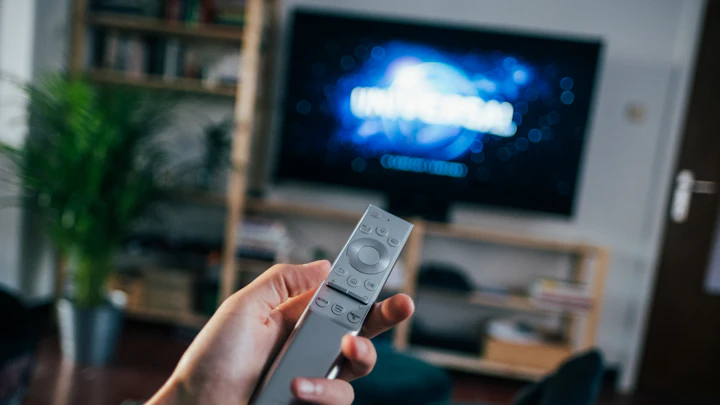
Photo: Jonas Leupe on Unsplash
Think about the last time you were deep in a show on JioHotstar or Amazon Prime Video. Forty minutes in. Emotionally invested. Leaning back.
The villain was about to make their move.
And then — a 30-second pre-roll. Unskippable. For a loan app.
Then another one. This time a real estate brand. Then a third, for a protein supplement.
By the third interruption, you weren't watching a show. You were watching your OTT subscription earn money for a media buyer somewhere.
This is where most Indian brands have planted their OTT strategy. Not inside the story. Around it. Between its scenes. Buying attention that was already given to someone else.
That's the starting observation. But the deeper problem isn't that the ads are annoying. It's that they're structurally misaligned with what OTT actually is — and what it makes possible for a brand willing to think differently about it.
What Most Brands Get Wrong
When Indian brands discovered OTT in 2020–21, the mental model they carried into the room was simple: this is digital television.
Same 30-second spot. Same media-buying logic. Same creative framework. Different screen.
That migration made short-term sense. Linear TV viewership was eroding at a mid-single-digit rate each year. Audiences were moving to JioCinema, Disney+ Hotstar, Netflix, Amazon Prime Video. The logical strategic response was to follow them there.
What that logic missed is that OTT is not television on a different device. The shift isn't just technological. It's behavioral. And behavioral shifts change what the medium actually does — for viewers, and therefore for brands.
Television vs. OTT: The Attention Difference
Television is a lean-forward medium that people often half-watch. Programmes run on a schedule you didn't choose. Ads are structurally embedded in a flow the viewer accepted before they sat down. The implicit deal: you get the content, we interrupt it periodically, that's the bargain.
OTT is lean-back and high-intent. The viewer made an active decision to watch something specific. They searched for it, selected it, pressed play. They are emotionally invested in a story they chose — not one that was playing when they sat down.
When you interrupt high-intent attention, the negative signal is stronger, not weaker. The viewer is annoyed precisely because they were more engaged. The pre-roll didn't arrive in a moment of passive consumption. It arrived in a moment of active investment.
The TV ad model migrated to a medium where it structurally underperforms. The brief didn't change. The audience did.
And most brands haven't noticed yet. Or haven't decided to care.
The Evidence
India's OTT market is no longer a niche. It is the primary entertainment infrastructure for a generation.
Here are the numbers:
- India's OTT audience reached 601 million people in 2025, about 41% of the population, according to the Ormax OTT Audience Report. Active paid subscriptions stood at 148 million.
- Connected TV is growing fastest: Ormax estimates 129 million active CTV users in 2025, up from about 70 million a year earlier.
- JioHotstar, formed in 2025 from the merger of JioCinema and Disney+ Hotstar, averaged 451 million monthly active users in FY26, which puts it among the largest streaming platforms in the world.
- Advertisers are following the viewers: industry estimates put connected TV ad spend in the thousands of crores a year and growing quickly.
This is serious money and serious attention. Brands are not trialling OTT any more. They are making committed investments to reach a committed audience.
Yet the dominant strategy within that investment remains: buy a pre-roll. Produce a 30-second spot. Run it before content you have nothing to do with. Measure reach.
What a Smaller Group Is Doing Differently
While most OTT budgets go into traditional interruption formats, a quieter group of brands has started doing something structurally different. Not bigger. Just more aligned with what the medium actually enables.
Swiggy's Instamart, for example, partnered with Netflix around the final season of Stranger Things to launch "InstaStrange", a gesture-controlled shopping store inside the Swiggy app, backed by an offline experience zone, all built around the show's cultural momentum. This was not an ad around the content. It was brand presence within the cultural event of the content.
Product placement inside shows, co-branded launches with streaming platforms and branded editorial segments during live sport all follow the same logic: be part of what the viewer chose to watch, not the thing standing in front of it.
These are not the biggest OTT spends. They may be the best ones.
The price of being inside a story hasn't caught up to the price of interrupting one. That window won't stay open long.
The Underlying Mechanism
Why does interruption underperform on OTT in ways it didn't on television? Three structural mechanisms.
1. The Lean-Back Context Amplifies the Signal
OTT viewers are in a qualitatively different attention state than TV viewers. They chose to be there. The emotional investment they bring to the content is higher because the decision to watch was more active.
When you interrupt high-investment attention, the intrusion registers more sharply. Not just as an inconvenience, but as a violation of context. The viewer was inside a story. You pulled them out of it.
Compare this to a TV viewer who may have had the screen on while cooking or scrolling their phone. The ad didn't interrupt deep engagement. It interrupted mild background attention. The stakes were lower.
2. Skip Culture Has Rewired Viewer Behavior
On platforms with skippable formats, most viewers skip a pre-roll the moment they're allowed to. They have been conditioned to reach for the skip button reflexively — often before a single second of the ad has passed.
Even on non-skippable inventory, the psychological experience is one of waiting rather than watching. The viewer is not receiving the ad. They are tolerating it. The brand paid for attention that was never actually given.
This matters because OTT brands are often benchmarking against TV GRPs — which count exposure, not attention. The viewer was technically exposed to the ad. The ad technically ran. But the attention the brand paid for was a debt that was never collected.
3. The Trust Context Is Structurally Different
When a viewer encounters a brand inside a story they care about — woven into the narrative, worn by a character they're emotionally invested in, appearing on a surface inside a world they've chosen to inhabit — the brand carries the emotional register of that story's universe.
When a brand interrupts that story, it inherits none of that trust. It interrupts it.
This isn't a nuanced or academic distinction. It's the difference between a brand that earns its place in the viewer's experience and one that buys a slot in the viewer's way.
Two mechanisms of influence. Two structural outcomes.
Pre-roll path: Brand pays for slot → viewer is forced to see it → ad runs → viewer waits → ad ends → viewer returns to content. Brand carries zero trust from the experience. At best, brand name recall. At worst, negative association with the interruption.
Integration path: Brand is embedded in content → viewer engages with story → brand appears within the story → brand carries the emotional register of the content → viewer associates brand with that context. The brand inherits the story's trust.
Neither of these is universally superior as a media strategy. But they do different things. And most Indian brands are treating them as interchangeable.
What the Right Approach Actually Looks Like
The shift isn't from "buy OTT ads" to "never buy OTT ads." It's from "all OTT spend is media buying" to "OTT spend has at least two structural layers — and they serve different strategic functions."
Layer 1: Media Inventory (Interruption)
Pre-roll, mid-roll, banner inventory, pause ads, CTV non-skippable spots. These buy attention-adjacent exposure, with all the structural limitations discussed above.
They work for reach. They work for frequency-building. They keep the brand name in circulation in front of a relevant audience. At the right CPM and scale, they have legitimate value as part of a broader brand investment.
But they don't build deep associations. They don't build the kind of emotional linkage that OTT's high-attention environment uniquely enables. And they don't earn the brand a place in the viewer's experience — they buy a slot in the viewer's interruption.
Layer 2: Content Presence (Integration)
Product placement within native OTT productions. Co-created content with OTT platforms. IP partnerships around specific shows or cultural events. Brand Spotlight formats that are editorial rather than commercial. CTV-native creative built for the big screen's session length and lean-back context — not repurposed 9:16 phone content.
This layer builds association. It builds trust. It builds premium positioning and emotional linkage. It works because the viewer didn't resist it. They accepted it as part of the experience they chose.
Why Most Brands Stay in Layer 1
Five structural forces keep brands in Layer 1 even when they know Layer 2 exists:
- Measurement infrastructure: Pre-roll ads produce clean, familiar metrics (reach, frequency, CPM, GRP). Brand integrations produce messier outcomes that are harder to attribute and harder to present in a quarterly marketing report. Finance likes the thing that generates a number.
- The brief: The standard brand brief for a campaign doesn't include "OTT integration strategy." It includes "media plan." And the media plan defaults to inventory — because that's what media agencies are structured to buy.
- Platform conversations: Most brands interact with JioHotstar and Netflix India through a media-buying interface, not a content-partnership interface. The content-partnership conversations require a different team on both sides and happen at a different level.
- Timeline: Integration requires lead time — often months. A standard campaign timeline is weeks. Layer 2 requires building relationships with OTT platforms before the campaign brief is written.
- Familiarity: The 30-second TVC is the brand team's comfort zone. It's what they know how to make. Transitioning to content integration requires a different creative philosophy, a different brief, and different creative execution. That's harder, even when it's better.
None of these forces make Layer 1 the right answer. They explain why most brands default to it.
A brand that interrupts a story you chose to watch gets borrowed annoyance. A brand inside that story gets borrowed trust.
What This Means for Indian Founders and Brands
If your brand is currently spending on OTT — or planning to — the question to ask before the brief is written is not "which platform?" or "what CPM?" It is:
Are we trying to reach attention, or earn it?
These are different objectives. They require different briefs. They produce different outcomes.
For Founders
Your personal brand on OTT is not the ads you run. It's the content you're part of — the podcast episodes, the documentary features, the cultural conversations you're associated with. These are Layer 2 signals. They carry far more weight with the right audience than any pre-roll will.
The founders who are building genuine authority in India right now are doing it through content association, not media buying. They're appearing on shows that their target audience already invests time in. They're contributing perspectives to platforms their audience trusts. They're not interrupting stories — they're becoming part of them.
For D2C and Consumer Brands
The OTT integration opportunity for Indian consumer brands is currently underpriced. Not because the audience is small — 600 million viewers is not a small audience. But because most brands haven't had the content-partnership conversation yet.
Branded integration within a Netflix original, an Amazon Prime India series, or a JioHotstar live event doesn't yet command the premium it will in two to three years, as more brands discover what it actually delivers. The brands that build these relationships now — with OTT platforms, with IP holders, with content producers — are building strategic assets that are both early and difficult to copy.
For Marketing Decision-Makers
The first question isn't creative. It's architectural. Do you have two separate OTT briefs — one for media inventory (Layer 1) and one for content presence (Layer 2)? If not, your entire OTT strategy is being run on a single layer that only does one thing.
The second question is relationship-based. Have you had a direct conversation with JioHotstar, Netflix India, or Amazon Prime Video about what exists beyond the pre-roll slot? In 2026, the answer for all three platforms is: considerably more than most brands have explored. But very few brands have asked.
The third question is measurement. Are you measuring OTT on TV metrics (reach and frequency) or on outcomes that actually reflect what OTT's high-attention environment can produce? If you can't distinguish between the two, you're not yet measuring your OTT investment accurately.
For Agencies
The brief that arrives from most clients is a media plan, not an OTT strategy. The question is whether the agency has the conversation that precedes the brief — the one about which kind of OTT presence the brand is actually trying to build, and whether the current plan achieves it.
The brands that are going to define the OTT integration economy in India over the next three years are being worked with by agencies that understand the difference between Layer 1 and Layer 2. Those are the relationships worth building now.
Our take
The Brief That Hasn't Been Written Yet
OTT is the most misunderstood medium in Indian marketing right now.
Not because brands don't know it exists. The money already flowing into OTT advertising is not ignorance. It is investment.
The misunderstanding is structural. Most brands brought the TV brief to an OTT medium. They imported the interruption logic to a context where interruption is resented. They measured OTT on TV metrics — reach, frequency, GRPs — and confused the appearance of a campaign with the presence of a brand.
The brands that will be better positioned in three to five years are the ones that start distinguishing between the two kinds of OTT presence right now. Not the ones spending more. The ones thinking differently about what the spend is for.
Not: "Are we advertising on OTT?"
But: "Where in the story are we?"
If the answer is "outside it, in a 30-second slot" — that's a starting point.
Not a strategy.
Working out what your OTT brief should look like? AgniCorp Media helps brands plan both media inventory and in-content integration.

State of Marketing publishes practical, independently researched guides on marketing, SEO and brand building. How we write and review articles.