The Premium Paradox: Why Premium Is a Condition You Build, Not a Price You Set
India is premiumising fast, yet most brands raise prices before building the conditions that make premium believable. The five conditions, in the right order.
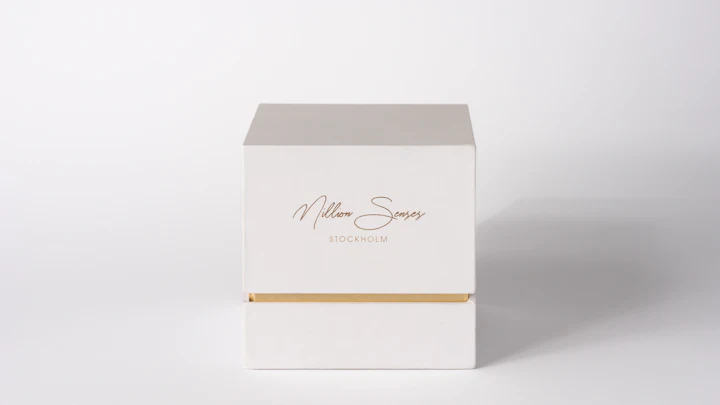
Photo: Pelicular Studio on Unsplash
There is a brand in India that sells premium-positioned beauty products. Better ingredients, cleaner formulations, more intentional design. Their founder is thoughtful. Their product is genuinely good. By most consumer assessments, it outperforms brands charging 40% more.
They cannot hold their price.
Every sales interaction begins with justification. Every comparison shopper bounces. Their best customers come through referral — the ones who never price-compare. Their most difficult customers arrive through a Google Shopping ad.
When we looked at the brand closely, the problem wasn't in the product. It wasn't in the price. The problem was in the sequence.
They set the price first. Then tried to build the perception after.
That's the wrong order. And it's the most common mistake in brand strategy.
What Most Brands Get Wrong
Most brands treat premium pricing as a decision made at the end of a business calculation: cost + margin = price. If the margin justifies a premium number, they charge it.
The assumption is that customers will evaluate the product rationally and agree.
They won't.
Buyers don't evaluate price against product quality at the moment of purchase. They evaluate price against a feeling — and that feeling was assembled long before they saw the number.
They assembled it from packaging. From copy. From who else uses the brand. From what the brand does and doesn't say. From how the brand made them feel the last time they encountered it.
If those signals said "premium," the price confirms it.
If those signals said "unclear" or "generic," the price triggers resistance.
Price isn't the decision. Price is the confirmation.
Most brands try to make price the decision — and wonder why buyers push back. The instinct is to justify: explain the ingredients, highlight the craftsmanship, articulate the process. These are all post-hoc justifications for a perception that should have been built before the buyer arrived.
You cannot explain your way to premium. You can only build your way there — and the building has to happen before the asking.
Premium is psychological architecture. And most brands are building the wrong thing in the wrong order.
The Evidence
The premiumization of India is one of the clearest commercial trends of the decade. Understanding it reveals something important about where consumer psychology is actually moving — and what brands need to build to capture it.
According to Worldpanel by Numerator, premium brands now make up about 15% of FMCG volumes in everyday categories such as detergents, toothpaste, tea, edible oils and skin creams.
Fifteen per cent of units sounds small, but premium products earn far more per unit, so their share of value is much larger than their share of volume. Fewer units, disproportionately more money. That is what psychological architecture produces.
Deloitte projects India's luxury market will grow about 20% a year to reach $200 billion by 2030. And rural households' share of super-premium FMCG volumes rose from about 30% in 2021 to 42% in 2025.
These are not isolated luxury signals. These are mass-market trends.
Companies are following the money. Parle Products now puts 60–65% of its new launches in the premium segment, up from about 40% five years earlier.
What does this data actually tell us?
It tells us that Indian consumers have made a decision. They are not choosing premium because their incomes have all risen dramatically. Rural India's share of super-premium sales has grown 12 percentage points in four years. The demand is not income-driven. It is aspiration-driven.
Consumers are not asking: "Is this product worth more?" They are asking: "Is this brand consistent with who I am becoming?" Premium, for the modern Indian consumer, is increasingly an identity signal — not a quality assessment.
And if brand is an identity signal, then the work of building premium is not in the product. It is in the brand architecture that makes the identity legible.
Most Indian brands operating in this environment are leaving premium revenue on the table — not because the market won't buy it, but because the brand hasn't built the psychological conditions that make the premium believable.
The Five Psychological Conditions
There are five psychological conditions that determine whether a buyer will accept a premium price. Most brands build zero of them systematically. The brands that command premium have built at least three.
1. Specificity
Vague brands invite price comparison. Specific brands create a category of one.
When a brand describes what it does for everyone, buyers group it with everything else in the category and compare prices. When a brand is specific — about who it serves, what problem it solves, what it will not do — the comparison becomes structurally harder. The buyer is no longer choosing between similar things. They are choosing whether they want this specific thing.
Specificity is free to implement. Most brands avoid it because it feels like narrowing. It isn't. It's the architectural move that makes premium psychologically available. The narrower you go in your definition, the wider you go in your perceived value — to the people you're actually for.
2. Scarcity and Selectivity
Limited availability signals something counterintuitive: this is not for everyone.
That signal carries value. Not because the product is physically scarce — but because the brand communicates that access is not automatic. Selective client lists. Limited production runs. Application processes. Waitlists.
These are not just tactics. They are psychological signals that say: the brand has standards. The buyer must qualify. That reversal of the typical brand-consumer power dynamic is one of the strongest premium signals available. A brand that turns buyers away communicates that being accepted means something.
3. Aspirational Reference Group
Buyers don't compare your brand to your competitors. They compare it to who they want to be.
The real question is not "who uses this product" but "who uses this brand — and do I want to be identified with that group?" Premium brands curate their social proof deliberately. They don't collect the most testimonials. They collect the most meaningful ones — from people who represent the buyer's aspirational identity rather than their current one.
This is why premium beauty brands use very specific faces. Why high-end consultancies name specific types of clients rather than client counts. Why premium coworking spaces photograph certain kinds of people doing certain kinds of work. The reference group is doing the psychological work of positioning.
4. Aesthetic Coherence
When every touchpoint looks like it was considered — packaging, copy, photography, pricing structure, response time, email design — buyers infer intentionality. And intentionality reduces risk.
A brand that clearly cared about everything signals that it probably cared about the product too. A brand with visual inconsistency — where the Instagram looks different from the website, which looks different from the packaging, which looks different from the invoice — signals a quality control question the buyer cannot answer comfortably.
Aesthetic coherence is not design for its own sake. It is risk reduction at the moment of purchase. The buyer is asking: "Is this brand trustworthy?" Visual consistency answers that question before words do.
5. Identity Alignment
The most powerful premium signal of all: the brand tells the buyer something about who they are.
Not "this product works." But: "choosing this product says something about the kind of person you are."
This is why brand mythology matters more than product specifications at the premium tier. Facts don't build identity. Story does. The reason consumers pay a premium for Paper Boat over a generic juice is not the formula — it's the feeling that this drink is for someone who values a certain kind of nostalgia and cultural connection. The product triggers an identity resonance. The price is the last thing that gets evaluated.
Identity alignment is the most durable of the five conditions. It is also the hardest to reverse-engineer. Brands that have built genuine identity alignment can sustain price increases that their competitors cannot follow — because they're not competing on product. They're competing on self-image.
The buyer's real question is never: is this product worth this price? It's: does paying this price say something I want to say about myself?
What the Right Sequence Looks Like
The sequence matters more than any individual element.
Most brands: set price → justify price → discount when buyer resists.
Premium brands: build signals → set price → let signals confirm.
The build phase comes first. Before the product page. Before the campaign. Before the sales conversation.
It's the copy on the homepage that communicates specificity — who this is for, who this is not for, what the brand does and does not do.
It's the selective list of clients or projects on the portfolio — not a count, but a curation.
It's the packaging that signals the brand cared about the detail of presentation before asking for attention to the product.
It's the About page that tells a story with a genuine tension — not a company timeline.
It's the DMs and inquiry responses that arrive like a person who has standards, not a support ticket system trying to close a lead.
These are not marketing tactics. They are psychological conditions that, once built, make price resistance structurally lower. The buyer arrives at the price having already assembled the feeling. The price confirms what they already suspected.
None of this requires a large budget. A small agency can build all five conditions with deliberate copywriting, selective portfolio curation, and visual consistency. A D2C brand can build them through product photography, founder voice, and distribution choices.
What it requires is a clear decision: build the signals before asking for the price. Most brands skip the build phase and go straight to the ask. The resistance they encounter is not a pricing problem. It is the consequence of an empty foundation.
What This Means For Founders and Brands
The Indian market is premiumizing faster than most brand strategies have adapted.
Premium brands already account for around 15% of FMCG volume. Rural India makes up over 40% of super-premium FMCG volumes. The luxury market is on track to reach $200 billion by 2030. The demand is clearly there.
What's missing is brand infrastructure.
Most Indian brands are still competing on product quality inside categories where the consumer has already moved to identity and signal. They are winning product comparisons and losing commercial outcomes. They are telling buyers what the product does — while the buyer is trying to figure out what the brand says about them.
The opportunity is significant. And it is largely uncontested — because most competitors are also stuck in the product-first, price-justify loop.
The question is not: "Is our product good enough for premium?" Most products are good enough.
The question is: "Has our brand built the five psychological conditions that make our premium believable?"
Specificity: Have we made clear who this is for and who it is not for?
Selectivity: Have we signalled that access to the brand is not automatic?
Reference group: Are we showing buyers the right aspirational social proof?
Aesthetic coherence: Does every touchpoint signal intentionality?
Identity alignment: Does the brand say something about the kind of person the buyer is becoming?
If the answer to several of these is no — the brand is not a premium brand, regardless of the price tag. And no amount of marketing spend will move price tolerance until the underlying architecture is in place.
The brands that will win the premiumization wave in India are not necessarily the ones with the best products. They are the ones that understand this sequence and build accordingly.
Our take
The most expensive mistake in brand building is not pricing too low.
It's building the brand in the wrong order.
We see this consistently — founders with genuinely superior products stuck in price wars because the brand never built the architecture that would have made the premium believable. The product deserves a better price. The brand hasn't earned it yet.
The fix is rarely the product. The fix is almost always the sequence.
Build the psychological conditions first. Specificity. Selectivity. The right social proof. Aesthetic coherence. Identity alignment. Let those accumulate. Let them work across every touchpoint before the buyer sees the number.
Then set the price.
The price doesn't need to be defended when the architecture already built the case.
Premium isn't a product feature. It isn't a price point. It's what a buyer feels before the transaction — and that feeling is entirely within a brand's control to build.
The brands that understand this sequence don't compete on price. They don't need to.
Running a brand that deserves a better price than it currently holds? AgniCorp Media runs brand audits that start with the sequence, not the creative.

State of Marketing publishes practical, independently researched guides on marketing, SEO and brand building. How we write and review articles.