The Search Split: Google Didn't Lose, It Stopped Being Where Decisions Start
Buyers now discover brands on TikTok, Instagram and YouTube, then validate them on Google. How the search split works and how to show up in both moments.
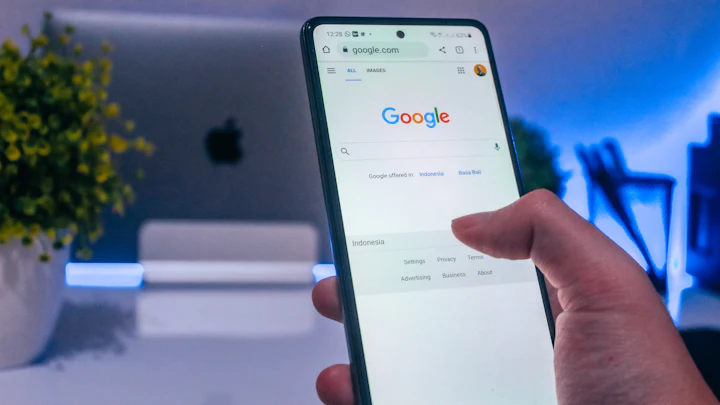
Photo: Arkan Perdana on Unsplash
Here is a situation that shouldn’t be surprising anymore — but still catches brands off guard.
A company ranks #1 on Google for their primary keyword. Not page two. The first result. The blue link at the top of the search results page for their category.
Their competitor has mediocre SEO. Their website ranks on page two at best.
But the competitor is generating significantly more qualified inbound. More conversations. More pipeline.
When you ask new clients of the competitor how they found them — not one says ‘I Googled them.’
They say: ‘I saw their video.’ ‘Someone sent me their YouTube.’ ‘I found them on TikTok.’ ‘They kept coming up when I was looking for answers about this.’
The purchase decision had already formed before Google entered the picture.
This isn’t an anomaly. It’s a pattern becoming structurally more common as the search journey splits into two distinct moments — and most brands are only present at one of them.
The brands winning search in 2026 aren’t better at Google than their competitors. They’re present where the decision starts — before Google enters the room.
What most people get wrong
The popular narrative around social search is approximately this: ‘TikTok is the new Google. Gen Z doesn’t Google things anymore. Search is moving to social media.’
This is directionally true in some ways. But the framing is misleading — and it’s generating two bad strategic responses.
Brands that take the ‘TikTok is killing Google’ narrative at face value make one of two errors:
Error 1: They panic and pivot their entire search investment toward social content — abandoning Google SEO, redirecting budget, reorganising teams. In doing so, they lose the validation moment that Google still firmly owns. Buyers who’ve completed the discovery phase and are ready to confirm and purchase still go to Google. A brand that has abandoned Google is invisible at the moment of commitment.
Error 2: They dismiss social search data as generational hype — ‘Our buyers are professionals, not Gen Z teenagers.’ They double down exclusively on Google. They keep losing the discovery moment to competitors who’ve been building social search presence for two years.
Neither response is right. The correct response requires understanding what the split actually is — and why it happened.
The root of the error is treating social search and Google search as if they compete for the same moment in the buyer journey. They don’t. They serve fundamentally different search intentions at different stages of the same decision process. Understanding that distinction is the beginning of a better strategy.
The evidence
The behavioural shift is real and measurable. Several independent data sources point to the same structural change.
From Adobe Express's 2026 survey of US consumers and small business owners:
- 49% of consumers have used TikTok as a search engine
- Up from 41% in Adobe's 2024 survey
From Forbes Advisor and Talker Research (2,000 US adults, 2024):
- 46% of Gen Z and 35% of millennials favour social media over traditional search engines
- Only 64% of Gen Z use search engines for brand discovery, compared with 94% of baby boomers
From Google itself, in 2022, when a senior vice president publicly acknowledged the shift:
- Nearly 40% of young people, according to Google's internal research, reach for TikTok or Instagram when looking for a place to eat, instead of Google Search or Maps
That last data point is significant. It came from inside Google. A company spending billions to dominate search was watching its own users route around it for a specific kind of question — and the executive made the observation publicly.
And in July 2025, a structural acknowledgment followed: Google began indexing Instagram posts in search results. Business and Creator accounts’ public Reels going back to January 2020 are now crawlable by Google. Instagram became the first major social platform to receive this treatment after TikTok, Pinterest, and Reddit. This is Google recognising — in infrastructure terms — that social content is now part of the search ecosystem.
One important qualifier before the data is overstated: coverage of the same Adobe research notes that only 7% of consumers said they'd rely more on TikTok than on Google. The 49% figure reflects using both, not replacing one with the other.
This distinction matters more than the headline number. Social search is a parallel layer, not a replacement. The strategic implication is different — and more nuanced — than the ‘TikTok killed Google’ narrative suggests.
The underlying mechanism
The reason people search differently on social platforms versus Google isn’t platform preference. It’s search intention.
There are two fundamentally different questions a buyer asks when they search. Both questions are real. Both need answering. But they happen at different moments and require different kinds of answers.
Discovery Search:
‘What is worth my attention? What do real people who’ve used this say? What does this actually look, feel, or perform like in the real world? Is this something someone like me would choose?’
This question is visual. Social-proof-led. Experience-first. It needs human testimony, not documentation. It needs to see the product in someone’s hands, hear an honest opinion from a real user, watch a comparison from someone whose taste resembles the buyer’s own. The answer cannot come from a website — it needs to come from people.
Platform fit: TikTok, Instagram, YouTube.
Validation Search:
‘Where exactly is this? What are the confirmed specifications, pricing, hours, contact details? How do I complete the transaction or find the physical location?’
This question is precise. Fact-first. Navigation-led. It needs accurate, authoritative, indexed information. The answer cannot come from social — it needs to come from a source the buyer trusts to be accurate and complete.
Platform fit: Google.
The sequence that emerges is not a replacement of one by the other. It’s a natural two-stage process:
Stage 1 (Discovery): Someone considers whether a product, service, or brand is worth further attention. They search on TikTok, YouTube, or Instagram. They watch 2–3 pieces of content from real users. They form a strong impression in minutes. They build familiarity and, in many cases, early trust or early dismissal.
Stage 2 (Validation): If the impression from Stage 1 was positive, they move to Google. They confirm the website, check delivery timelines, compare prices, and complete the purchase. This stage is often quick — because the decision was already substantially made in Stage 1.
The critical implication: if a brand wasn’t present in Stage 1, the buyer who reaches Google may already have a competitor’s brand as their mental reference point. The Google visit may be to validate the competitor — not to discover alternatives.
This is the mechanism most marketing strategies don’t account for. The funnel doesn’t start where most brands are measuring it. The shortlist is often formed before a single Google search happens.
What the right approach actually looks like
The response to the search split is not a Google versus social choice. It is a search intention mapping exercise followed by a content architecture decision.
The question is not ‘where should we put our content budget?’ The question is: at the discovery moment, for the specific questions our buyers are asking before they’re ready to validate, does our brand appear — visually, credibly, with social proof — in the platforms where they search?
A dual-search strategy built for both moments has five practical components:
- Map the discovery search queries first.
Before building social content, identify the specific questions your buyers ask before they’re ready to validate. Not ‘where to buy X’ queries — those are validation searches for Google. The discovery questions look like: ‘Is X worth it?’ ‘What’s the difference between X and Y?’ ‘What do real people think of brand Z?’ ‘Does this work for someone with my specific situation?’
- Build searchable social content — not just engagement content.
Social search and social engagement are not the same goal. Content built for engagement and content built to surface in platform search have different structures. Search-optimised social content uses specific, query-matching language in captions, titles, and on-screen text. It answers a question someone would literally type into TikTok or YouTube. Engagement-optimised content hooks an audience that’s already scrolling; search-optimised content intercepts someone who is actively looking.
- Understand platform-specific search mechanics.
- TikTok indexes content through caption keywords, on-screen text, audio (including spoken words), and engagement velocity. Captions are not decorative — they are metadata.
- YouTube titles, descriptions, and chapter markers are indexed by YouTube’s own search AND by Google. A well-optimised YouTube video surfaces on both platforms simultaneously.
- Instagram Reels are now crawlable by Google as of July 2025. Caption language matters for external search visibility. A Reel’s caption is no longer just a social prompt — it is a searchable document indexed by the world’s largest search engine.
- Treat the two moments as two separate briefs.
Discovery moment: create content that answers the question before the buyer knows they’re ready to decide. Familiarity and impression — not conversion. Validation moment: ensure Google presence confirms and completes what social already started. The website, reviews, and organic search results should all close the loop that social opened.
- Trace where buyers actually come from — before the analytics step.
Ask your last twenty clients where they first encountered you. Not which channel they used to complete the purchase — where they first formed an impression. The answer is almost always different from what attribution tracking reports. And it’s almost always more social, more word-of-mouth, and more discovery-search-driven than the data suggests.
What this means for founders, brands, and creators
The search split creates different implications depending on who you are. All three groups face a version of the same structural gap.
For founders: your personal brand operates in both search moments too. When a potential investor, partner, or client wants to evaluate you — they are not opening Google first. They are opening YouTube or LinkedIn to see whether you speak about your space, whether your thinking is visible, whether someone whose judgment they respect has mentioned you. If you only have a polished website and nothing searchable on social, you are invisible at the moment the impression forms. The Google search that follows confirms what social already decided.
For brands: the search split creates a first-mover advantage that is harder to reverse than a Google ranking gap. A brand that builds early searchable social presence creates compounding familiarity — buyers find them at the discovery moment, remember them, and then validate on Google. A brand that shows up only at the validation moment is competing on the assumption that the buyer’s shortlist is still open when they reach Google. Often, it isn’t.
Category association formed in discovery search is sticky. A competitor who owns the search term on TikTok and YouTube before your brand does is not winning a content competition. They are structurally embedded in the buyer’s mental reference frame.
For creators: your ability to own a search query on TikTok or YouTube is a category-defining move that agencies and brands recognise — but most creators don’t architect deliberately. The creators with sustainable platform authority aren’t just producing content. They’re answering the same category of question repeatedly, in different ways, building the depth of indexed content that makes them the trusted result when someone searches that topic on the platform. That is not an algorithm game. It is a search positioning game.
Our take
Most brands we speak with have a clear answer when asked about their Google ranking. They have a number, keywords they’re targeting, and a rough sense of where they sit.
When we ask ‘where does your brand appear when someone searches your category on TikTok or YouTube?’ — the answer is almost always silence, followed by ‘we’d need to check that.’
That asymmetry in how much attention each search moment receives is not random. It’s a legacy of how marketing teams learned to think about search — primarily as a Google problem, measured by rankings and organic traffic. Those metrics are real. They still matter. They’re just no longer the complete picture.
The world your buyer lives in is different. They pick up their phone and search where the answer feels most real and most human. For a growing portion of the market — and a majority among younger buyers — that first instinct is social. And if your brand isn’t there, not because you’re not good but because the content simply doesn’t exist, someone else fills the gap.
The search split doesn’t require abandoning what’s working. It requires building the layer that works earlier.
When we look at a brand’s search visibility, we map both moments — not just Google presence. The audit regularly surfaces a gap between where marketing effort is concentrated and where the buyer’s decision is actually starting. Closing that gap is rarely about more content. It’s about placing the right content, with the right search intention, at the right moment in the journey.
If you’re seeing the pattern — solid Google performance but flat inbound, buyers who ‘just Googled you’ rather than discovered you earlier — that’s the diagnostic signal. The search split is the mechanism. And building both layers is the fix.
A competitor who owns the search term on TikTok and YouTube before your brand does is not winning a content competition. They are structurally embedded in the buyer’s mental reference frame.
Want to show up in both the discovery and the validation search? AgniCorp Media maps where your buyers search, on Google and on social.
State of Marketing publishes practical, independently researched guides on marketing, SEO and brand building. How we write and review articles.