The Luxury Real Estate Media Mirage: Why Drone Films Rarely Sell ₹20 Crore Homes
Cinematic drone videos and CGI walkthroughs win views, not ultra-wealthy buyers. Why technical clarity, privacy and private placement sell luxury homes better, and a 30-day plan for developers.
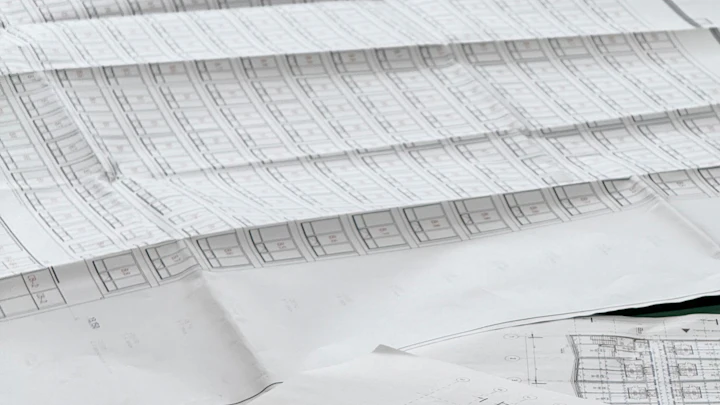
Photo: Marina Zvada on Unsplash
Walk along any prime residential corridor in 2026, from Golf Course Road in Gurugram to the Worli seafront in Mumbai, and you'll see the same launch playbook.
A developer marketing ₹20 crore to ₹80 crore residences hires a production house. The budget runs to tens of lakhs, sometimes more. The output is predictable:
- FPV drone fly-throughs set to big orchestral soundtracks.
- Photorealistic CGI walkthroughs, with models stepping out of sports cars onto infinity balconies.
- Celebrity-fronted video tours pushed across Instagram Reels, YouTube pre-roll and broker WhatsApp groups.
The agency report that follows celebrates reach: a million-plus views, tens of thousands of likes, "massive awareness".
Then the sales team looks at where actual buyers came from. Very few, often none, trace back to the viral film. The inbound inquiries are mostly curious browsers and brokers asking for floor plans on WhatsApp. And the inventory still moves the way it always has: through channel partners, at a commission.
The video wasn't bad. It was the wrong tool for the buyer. A ₹25 crore home is sold to a few hundred people at most, and a format built for mass reach measures exactly the wrong thing.
Why the cinematic playbook misfires at the top of the market
1. Privacy is part of what luxury buyers pay for
For the wealthiest buyers, privacy isn't a nice extra. It's one of the main things they're buying. Coldwell Banker's 2026 luxury research, built on data from the Institute for Luxury Home Marketing, ranks privacy alongside views and community amenities as the most important features after size and location. Its mid-year report even notes affluent buyers buying neighbouring homes to protect their privacy.
Now think about what a public interior fly-through does. It shows millions of strangers the route from the gate to the main bedroom, the layout of the private lift lobby and the sightlines from neighbouring towers. For a prominent founder or business family, that's not aspirational. It's a reason to hesitate. At the very top of the market, many of the most desirable homes change hands quietly, through private networks, before any public campaign is made.
2. Wide-angle glamour sets up a letdown
Cinematic production is selective by design. Ultra-wide lenses, speed ramps and heavy colour grading make rooms feel bigger and brighter than they are. That's fine for a lifestyle film. It's a problem when the buyer then visits the site and finds lower ceilings, tighter balconies and less light than the video suggested.
Buyers who have built businesses are used to spotting presentation tricks. The gap between the film and the floor costs the developer credibility at the most important moment of the sale.
Notice what buyers actually reach for. In a Rightmove survey of around 10,000 UK property hunters, one in five said they would ignore a listing with no floor plan. That study is from 2015 and covers the mass market, but the principle holds even more strongly at the top end: serious buyers want the plan, not just the mood.
3. A lifestyle film answers none of the advisers' questions
A ₹25 crore home isn't an impulse buy. It's a major capital decision, and the buyer's family office, architect or lawyer will ask questions a lifestyle video never touches:
- What is the structural system and concrete grade, and who certified it?
- How well are apartments sound-insulated from each other, and is there a test report?
- What fresh-air and filtration system serves the homes, given city pollution?
- What are the expected maintenance charges and reserve funds over the next 10–20 years?
- Is the title clear, and what is the RERA registration status?
When the marketing offers champagne and violins instead of answers, it suggests the building is designed to impress, not to last.
A better approach: the architectural dossier
The alternative isn't "no marketing". It's marketing built around clarity and discretion. We call it the architectural dossier approach. Four parts:
1. Move interiors off the public feed
Stop publishing full interior walk-throughs and detailed unit layouts on social media and retail portals. Keep public channels for the brand, the location and the architecture, and share unit-level detail only with qualified, verified prospects.
One caveat for Indian developers: you can't make a project invisible. Under the Real Estate (Regulation and Development) Act, 2016, a registered project's approvals and key details sit on the state RERA website, and every advertisement must carry the RERA registration number. Discretion here means not broadcasting what doesn't need broadcasting. It doesn't mean hiding what the law requires you to disclose.
2. Replace the render with a technical dossier
Build a confidential, well-produced dossier that reads like an investment memorandum, not a brochure:
- True-to-scale floor plans with real dimensions, column positions and service areas.
- Sound-insulation test results from a third-party lab, if you have them.
- Air-quality specifications: ventilation system, filtration grade and how it's maintained.
- Structural documentation: concrete grade, seismic design and the engineers who signed off.
- Running costs: projected maintenance charges and reserves.
Every number in it should be one you can defend with a certificate or a test report. A dossier with inflated claims is worse than a glossy film, because advisers will check it.
3. Show space and light honestly
Replace wide-angle tricks with section drawings that show real slab-to-slab and clear ceiling heights. Add a sun-path or daylight study showing how light falls across the main rooms at different times of day and year. When buyers can see the space and light accurately before they visit, the site visit confirms the story instead of puncturing it.
4. Sell in small rooms, not big feeds
Instead of open houses and mass broker roadshows, host small, invitation-only evenings of 8–10 people at a gallery, heritage property or private dining room. Make the format genuinely useful: an architect or urban economist talking about the city, the building and long-term value, followed by unhurried conversation. Share the dossier at the end, privately.
This doesn't have to mean cutting out brokers. The best channel partners already have relationships with exactly these buyers. But a developer that brings qualified buyers to the table directly has more control over price and pays less in commission.
Why the economics matter
The numbers are simple arithmetic. On a project with ₹400 crore of inventory, every 1% of channel-partner commission is ₹4 crore. If direct, relationship-led selling replaces even part of broker-led sales, the saving can dwarf the cost of a dossier and a series of private evenings, which typically costs far less than a large video production and paid-media push.
The other saving is on price. Inventory that sits unsold invites discounting. A buyer who has seen the engineering, light and costs up front has fewer reasons to haggle.
This doesn't mean every developer will close faster or at full price. Location, pricing and the builder's track record still dominate. But the marketing should help those things, not distract from them.
The same lesson outside real estate
The principle applies wherever a small number of expert buyers make large decisions:
- Enterprise B2B technology. A cartoon explainer video rarely persuades a CISO or principal architect. A detailed technical whitepaper with real benchmarks, shared in a private briefing, often does.
- Luxury consumer brands. Loud influencer unboxings can cheapen a premium product. A quiet, detailed story about sourcing and craft, sent to existing patrons, builds the sense of a serious house.
In each case, the move is the same: less spectacle, more substance, delivered to fewer, better-chosen people.
A 30-day plan for developers
Week 1: Audit what's actually working. Look at the last 24 months of video production and paid social spend. For every buyer who signed, trace where they first came from. Be honest about how many came from a public video.
Week 2: Decide what stays public. Keep brand, location and architectural films public. Take down full interior tours and detailed unit plans from social media and portals, while keeping every RERA disclosure in place. Train the sales team to qualify inquiries before sharing unit detail.
Week 3: Build the dossier. Work with your architects and structural engineers to compile accurate plans, test reports, specifications and running-cost projections. Produce a limited number of high-quality printed copies and a secure digital version.
Week 4: Run your first private evenings. Host two small, invitation-only sessions for qualified buyers, family office representatives and trusted channel partners. Share the dossier privately and follow up one-to-one.
Our take
In ultra-luxury, attention is easy to buy and almost worthless on its own. A million views from people who will never buy doesn't help sell a ₹25 crore home. It may even put off the few who could.
Wealthy buyers aren't looking for spectacle. They're looking for permanence, quiet, clean air and privacy, and they want proof. The developers who win at the top of the market will be the ones who show the truth about their buildings to the right people, quietly and in detail.
Rethinking how you market a premium product? AgniCorp Media works with brands on positioning and content built for the buyers who matter.

State of Marketing publishes practical, independently researched guides on marketing, SEO and brand building. How we write and review articles.