How to Write a Content Brief That Gets Better Articles (From Writers and AI)
Vague briefs produce generic content, whether a freelancer or an AI tool writes it. A practical content brief template for small marketing teams, covering audience, angle, sources, structure and what good looks like.
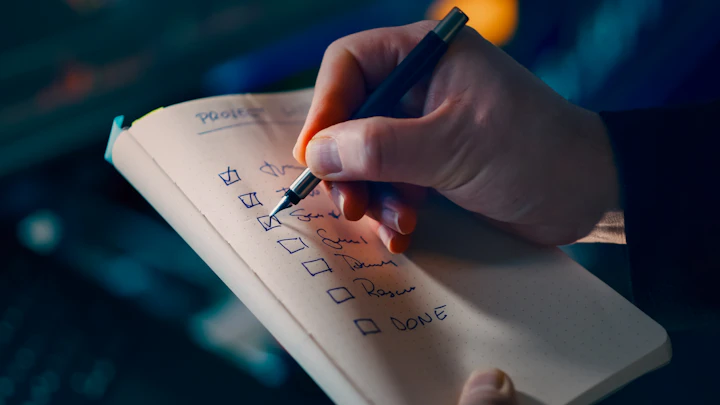
Photo: Jakub Żerdzicki on Unsplash
Most disappointing articles start with a disappointing brief. "Write 1,500 words on email marketing for small businesses, include keywords" leaves the writer to guess the audience, the angle, the depth and what the piece is for. The result is usually safe, generic and interchangeable with a hundred other articles.
The same is true when the "writer" is an AI tool. A short prompt gets a short-cut answer. The brief is where the thinking happens, and no writer, human or machine, can supply thinking you didn't give them.
Here's a content brief template small teams can use, and why each part matters.
1. The purpose
Start with one or two sentences on why this piece exists:
- What should the reader be able to do or decide after reading?
- What should it do for the business? Bring search traffic, support sales conversations, answer a common support question, build authority on a topic.
"Help small D2C founders decide whether to start an email newsletter, and lead the right ones to our email audit service" is a purpose. "Blog post about email" isn't.
2. The reader
Describe the reader as a person, not a demographic:
- Who are they, and what's their role?
- What do they already know, and what don't they?
- What problem brought them here?
- What would make them stop reading?
A guide for a first-time founder and one for an experienced marketing manager on the same topic should look completely different.
3. The angle
This is the part most briefs skip, and it's what separates useful content from filler. What's your point of view? What will this piece say that the top search results don't? Google's own guidance on helpful, people-first content asks a similar question: does the content add original information or analysis beyond the obvious?
Good angles often come from:
- Your own experience: what you've seen work or fail.
- A disagreement: common advice you think is wrong, and why.
- A specific situation: the topic applied to a particular industry, size of business or market, such as India.
- A sharper question: not "email marketing tips" but "what to send in your first five newsletters".
If you can't state the angle in one sentence, the piece isn't ready to be written. Our piece on AI in marketing without sounding generic explains why this matters even more when AI tools are involved.
4. Search intent and keywords
If the piece is meant to rank, include:
- The main search query it should answer, and a few related ones.
- What searchers actually want: a quick answer, a step-by-step guide, a comparison or a template.
- What already ranks, and what's missing from those pages.
Keywords are a guide, not a quota. Ask the writer to answer the questions behind them clearly, not to repeat phrases. Our topic clusters guide shows how a single piece fits into a wider plan.
5. Sources and facts
Tell the writer where facts should come from:
- Approved sources, such as official documentation, original research, your own data or named experts.
- Sources to avoid, such as unsourced statistics on agency blogs, which often recycle old or misquoted numbers.
- Your own material: customer questions, sales call notes, product details, case studies.
Ask for a link to the original source for every statistic. This is especially important with AI tools, which can produce confident-sounding figures that don't exist. If a number can't be traced, it shouldn't be published.
6. Structure
Give an outline, even a rough one:
- Suggested headings or questions to answer.
- Where examples, checklists or tables would help.
- What to cover briefly and what to cover in depth.
- The approximate length, based on what the topic needs rather than a round number.
7. Voice and style
Point the writer to two or three of your best existing pieces as examples, and note any house rules: spelling (British or American), words to avoid, how to refer to your brand, and whether to write in the first person.
8. Links and calls to action
List the internal pages to link to and the one action you want readers to take at the end. One clear next step beats a page full of buttons.
9. What good looks like
Finish with a short checklist the editor will use:
- Does it fulfil the purpose for this reader?
- Does it have a clear angle?
- Is every fact sourced?
- Would someone in our audience save or share it?
Sharing this upfront saves rounds of revisions.
A one-page brief template
Copy this into a document and fill it in for each piece:
- Working title:
- Purpose (reader outcome and business goal):
- Reader (who, what they know, what they need):
- Angle in one sentence:
- Main query and related questions:
- What current top results miss:
- Approved sources and our own material:
- Outline:
- Voice notes and example pieces:
- Internal links:
- Call to action:
- Definition of done:
Better briefs, better content
A good brief takes 30 to 60 minutes to write. It saves hours of rewriting, and it's the difference between content that sounds like everyone else's and content that sounds like you. Once a piece is published, use our guide to turning one blog post into a week of social content to get more from it.
Want help building a content process that produces work worth reading? AgniCorp Media helps brands plan and produce content with a point of view.

Muskan Agarwal is Head of Content at State of Marketing and co-founder of AgniCorp Media, where she leads digital marketing strategy across blogs, podcasts, newsletters and social channels. How we write and review articles.