The Co-Creator Gap: Why Brands Pay Creators to Talk Before Asking What They Know
Most creators get briefed after every important decision is made. Why that wastes what they know about their audience, and three practical ways to bring them in earlier.
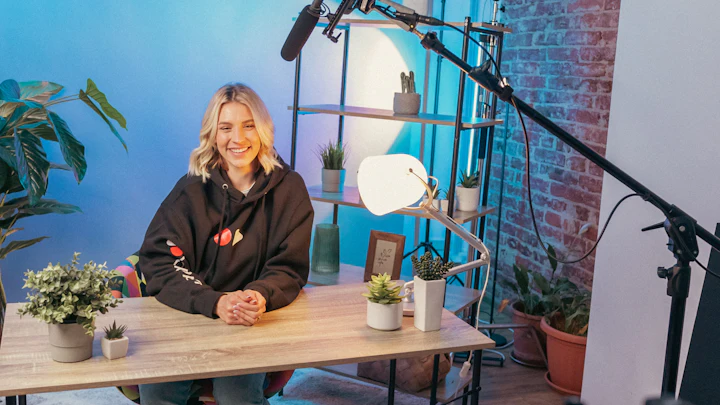
Photo: Videodeck .co on Unsplash
Imagine a beauty brand launching a new foundation. The name is locked. The shade range is approved. The launch date is set and the campaign message is written. Only then does the brief go to a creator with a few lakh followers, who has been talking to her audience every day for years.
She shoots the content, and it goes out. The report shows good reach, decent engagement and a conversion rate that barely moves.
Nobody in the review asks what she knew that wasn't in the brief. Perhaps her followers have been asking about undertones for months, and the shade range doesn't solve that. Perhaps she could have predicted the first objection the product would face. Nobody asked, so nobody knows.
That's the co-creator gap: brands often bring in creators after the decisions their knowledge could have improved. (This example is made up, but anyone who has run creator campaigns will recognise the shape of it.)
A better brief won't close it
The industry has already absorbed the usual lessons. Don't script creators too tightly. Disclose partnerships. Choose creators who fit the category instead of chasing follower counts. We've made those arguments ourselves, including in why most influencer briefs kill the content and why the creator you pick matters.
All of those improve how a message gets delivered. The order of events stays the same, though. The brand decides what to sell and how to position it, and the creator arrives at the end to communicate it. Calling that a partnership doesn't change the fact that it often works like a media buy with a human voice.
What the data does and doesn't show
The creator supply in India has grown quickly. Qoruz counted 9.62 lakh influencers in 2020 and 4.06 million in 2024, a 322% rise.
Brands seem to believe in deeper relationships too. In Kofluence's 2026 report, 62% of brand professionals surveyed said long-term creator partnerships generate stronger ROI than short campaigns. That's a statement of opinion, and the report's notes list only 50 brand managers among the survey respondents, so it's far from settled proof.
The same report offers a useful reality check: only 13.3% of brands connect influencer spending directly to formal revenue targets, and 46.4% judge performance campaign by campaign. Many brands say they value long-term partnerships while measuring them in short bursts, a pattern we looked at in the rebook gap.
On co-creation itself, the evidence is thinner. We didn't find a rigorous public study comparing products or campaigns shaped by creators with those that weren't. There are examples: a Campaign India column says Kuku FM worked with creators to shape its content pipeline, and that creators helped mCaffeine refine the sensory appeal of products before launch. That's a columnist's account, not an audit of the results. So what follows is a reasoned argument based on how creators work, and you should test it on your own launches.
What a creator may know that you don't
A creator with an engaged audience sits on information that's hard to collect any other way:
- What people ask in private. Comments show what people will say publicly. DMs often show what they really want to know.
- What gets saved. A save can hint at future intent, because someone plans to come back to it.
- Why the last recommendation disappointed. Creators often hear about it quickly and directly.
- The vocabulary. The exact words people use to describe a problem can improve your product page, ads and packaging copy.
Don't overrate this. A creator's audience isn't your whole market, and the loudest followers aren't always typical. It works best as one input alongside customer research and sales data. It's also a reason to pick creators with real conversations happening around them, because a large following doesn't guarantee they'll have this insight.
Why it rarely reaches the people who decide
The timing is wrong. Product, naming and positioning are usually handled internally, long before the campaign team starts looking for creators. By then the useful questions are closed.
There's no route for feedback. A creator might tell a campaign manager that a shade won't work for her audience. That note may never reach the product team. The insight exists in a conversation, and the organisation never learns it.
The deal is transactional. A flat fee for a post asks for one thing, and creators reasonably deliver that one thing. If you want judgment as well, pay for judgment.
Three ways to bring creators in earlier
1. A paid session before the brief
This is the easiest place to begin. Before writing the brief, spend an hour or two with each of a small number of creators, and pay them for that time. Try questions like these:
- What does your audience say is missing in this category?
- What objection do you expect them to raise about this product?
- How do they describe this problem, in their own words?
- What would make someone recommend this to a friend without being asked?
Ask for patterns, not screenshots of private messages, because followers didn't share those with your brand. Use an NDA if you're showing unreleased products. Then pass the notes to whoever owns the brief, as well as to product and brand teams. Our positioning statement builder is a simple way to check whether what you've heard changes your position.
2. Input before the product is final
Next, invite a few trusted creators to react to names, descriptions, packaging and pricing while those decisions can still change. They won't be designing the product. They're adding a view from the audience's side at a useful moment.
This needs a longer arrangement, typically a retainer that starts before campaign production. It also needs someone inside the brand with the authority to act on what they hear. Otherwise you're just collecting opinions.
3. A commercial stake
The deepest version ties the creator's income to the product's success through a revenue share, a co-branded line or sometimes equity. Then the creator has a clear reason to care whether the product works.
Be careful here. This suits only certain products and relationships, and it can go badly. A January 2026 Financial Express report described D2C brands growing more cautious about celebrity co-founders after several ventures struggled to sustain momentum. A famous name doesn't replace a good product, and a stake doesn't guarantee effort. Agree in writing what happens if sales fall short or either side wants out, and make sure any financial interest is properly disclosed when the creator promotes the product. Check current ASCI rules and get legal advice before signing.
Where to begin
If you're a founder, separate two questions that often get mixed up. "Who can reach my audience?" gives you a media plan. "Who knows something about this audience that I don't?" gives you the beginning of a better brief.
If you already run a creator programme, try one simple audit. Has a creator's input ever changed a decision about the product, its name, its price or its launch timing? If not, you may be running a placement programme. That can still be worthwhile, as long as you know what you're buying.
If you're a creator, treat your understanding of your audience as something of value, separate from your reach. Ask brands, "Would you like to know what I'm hearing from my audience before you finalise this?" The answer tells you what sort of relationship is on offer, and you can charge for the insight if they say yes.
Run one small test
You don't need a new operating model to find out whether this works. On your next launch, hold a paid pre-brief session with three creators, and write down what you heard. Note what you changed because of it. Then compare the results with a similar past campaign, while accepting that one launch proves little.
If nothing they tell you is new, you've spent very little to learn that. If one of them spots a problem before your customers do, that's an inexpensive place to find it.
Want creators involved earlier, in a way your team can act on? AgniCorp Media helps brands build creator programmes that go beyond the post.

Devv Bairaagi is Principal Strategist at State of Marketing and co-founder of AgniCorp Media, where he leads strategy. His background spans Hyundai, WorkIndia and the United Nations. How we write and review articles.