The B2B Email Placement Gap: Why Your Programme Looks Healthy While Gmail Disagrees
Gmail inbox placement fell from about 91% to under 82% between Q1 and Q3 2026, and Google Workspace fell further. Why a 99% delivery rate hides the problem, what's driving the drop, and what B2B email teams should track and fix.

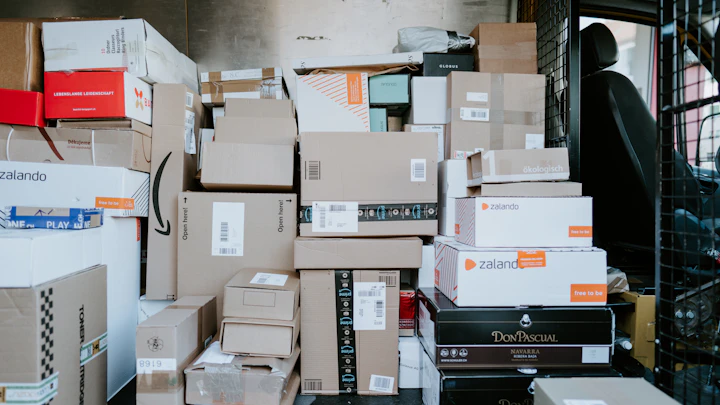
Photo: Viva Reella on Unsplash
Most email dashboards show a delivery rate above 99%. Email platforms report it by default because it's simple to calculate: messages accepted by the receiving server, divided by messages sent. It's accurate. It just doesn't tell you whether your prospect ever saw the email.
The number that does is inbox placement rate: the share of messages that land in the inbox rather than in spam or nowhere at all. For B2B senders in 2026, that number has fallen sharply, and most teams aren't tracking it.
How a 99% delivery rate hides the real number
A message the receiving server accepts counts as "delivered". What happens next is up to the mailbox provider. Gmail, Microsoft, Yahoo and corporate filtering tools each decide for themselves: inbox, Promotions, spam, or blocked.
Delivery rate tells you the message got through the door. Inbox placement tells you where it ended up.
Validity's 2026 Email Deliverability Benchmark, which covers sending data from 2025, put the global average inbox placement rate at 87.2%. Of the rest, 6.1% went to spam and 6.6% went missing, meaning blocked or rejected. Roughly 13 in every 100 messages never reached an inbox, even though most of them would have shown as "delivered".
Gmail's 2026 drop
Gmail is the largest mailbox provider, with 42.9% of global market share in Validity's benchmark. In its Email Radar update on Gmail, published in late October 2026, Validity reported that:
- Gmail's average inbox placement rate fell from 90.97% in Q1 2026 to 81.57% in Q3 2026, a drop of about 9.4 points.
- Gmail spam placement rose from 5.4% to 9.5% over the year.
- The share of mail going missing (blocked or rejected) rose from 3.6% to 8.9%.
That's a big change in nine months. If your team plans Q4 sends using benchmarks or results from early 2026, the baseline may already be out of date.
B2B senders were hit harder
For B2B marketers, the more relevant number is Google Workspace, the business version of Gmail. Validity found that Google Workspace inbox placement fell from 88.9% to 74.3% over 2026, a drop of 14.6 points.
And that's before corporate security filters get involved. Many B2B emails pass through two checks: the mailbox provider, then a filtering company such as Proofpoint or Mimecast. In Validity's 2025 data, filtering companies had an average inbox placement rate of 79.0%, down 5.8 points on the year before. Proofpoint alone held about half of the corporate filtering market.
Validity's sector figures point the same way. Software senders averaged 85.7% inbox placement in 2025 and business services 85.1%, both below the global average.
| Where the email goes | Inbox placement | Source |
|---|---|---|
| Global average, 2025 | 87.2% | Validity benchmark |
| Gmail, Q1 2026 | 90.97% | Validity Email Radar |
| Gmail, Q3 2026 | 81.57% | Validity Email Radar |
| Google Workspace, 2026 (start to latest) | 88.9% to 74.3% | Validity Email Radar |
| Filtering companies, 2025 | 79.0% | Validity benchmark |
What's driving the decline
Validity describes the Gmail drop as the result of several changes landing together.
Sender rules are now fully enforced. Google and Yahoo's bulk sender requirements took effect in 2024: authenticate your mail, offer one-click unsubscribe and keep spam complaints low. Validity says those rules are now fully enforced, so senders who fall short see more spam placement and more rejections.
Gmail's Promotions tab changed. Promotions is now sorted by relevance rather than by time, and Gmail adds automated annotations to some messages. Neither is spam filtering, but both mean some senders' emails are seen less often. Less engagement can weaken a sender's reputation over time.
AI in the inbox. AI summaries and assistants mean some messages are read in summary or handled without being opened. Validity suggests this further reduces the engagement signals mailbox providers use to judge senders.
Where authentication stands
DMARC is the email authentication policy that tells mailbox providers what to do with mail that fails checks. It has three settings: "none" (monitor only), "quarantine" (send failures to spam) and "reject" (block them).
Publishing a DMARC record at p=none meets the minimum requirement, but it doesn't stop anyone spoofing your domain. Adoption is still patchy. EasyDMARC's 2026 analysis of the top 1.8 million domains, as reported by Geysera, found that 52.1% had a valid DMARC record and only 22.9% enforced it at quarantine or reject.
Complaint rates matter too. Google's sender guidelines ask bulk senders to keep spam complaints below 0.1% and never reach 0.3%. The average across Validity's 2025 data was 0.06%.
What to track instead
Treat delivery rate as a minimum standard, not a performance measure. Inbox placement is the number that connects to results.
Most email platforms don't report inbox placement because measuring it needs seed testing: sending to a panel of monitored addresses across the main providers. Specialist deliverability tools offer this. For Gmail specifically, Google Postmaster Tools is free and shows your spam rate, authentication status and reputation. Many B2B teams haven't set it up.
A campaign can show 99.4% delivery in your email platform and 78% inbox placement in a seed test. Both numbers are correct. Only the second tells you how many people could actually see the email.
For B2B, report Google Workspace and Microsoft 365 addresses separately from consumer email. They behave differently, and blended benchmarks hide the problem.
Fix the foundations before your next big send
- Set up Google Postmaster Tools. It's free, and without it you can't see how Gmail views your domain.
- Complete your authentication. SPF and DKIM should be in place. DMARC should be published and moving towards quarantine. Before you tighten it, review your DMARC reports to find every legitimate sender, including your email platform, CRM, support desk and sales tools. Skipping this step can block your own mail.
- Segment B2B sends. Test placement for Google Workspace and Microsoft 365 domains separately and track their engagement separately.
- Clean your list. Contacts change jobs and companies change domains. Before a major campaign, consider suppressing addresses that haven't engaged in the last 90 to 180 days, to cut bounces and complaints.
- Don't ramp up volume to cold segments. Validity's advice after the Gmail data runs against common Q4 habits: send smaller, targeted campaigns to engaged people rather than pushing volume to hit totals.
- Make unsubscribing easy. One-click unsubscribe should work immediately. A slow or broken process leads to more spam complaints.
If your sales team runs outbound from the main company domain, the same risks apply. We covered that in the AI SDR mirage.
The reporting gap is the real problem
Delivery rates sit in the email platform and rarely reach leadership. Inbox placement usually isn't measured at all. So when open rates fall while delivery stays at 99%, teams tend to blame subject lines rather than placement.
The 2026 data suggests that's a mistake. Gmail placement fell from about 91% to under 82% in nine months, and Google Workspace fell further. A B2B email programme built to reach decision-makers needs inbox placement as a core metric, tracked separately for Google Workspace and Microsoft 365. Without it, a healthy-looking dashboard can hide a programme that fewer and fewer buyers actually see.
Is your email programme measured against the wrong number? AgniCorp Media helps B2B marketers build performance systems that track inbox reach, not just delivery.

Devv Bairaagi is Principal Strategist at State of Marketing and co-founder of AgniCorp Media, where he leads strategy. His background spans Hyundai, WorkIndia and the United Nations. How we write and review articles.