The Longevity Real Estate Trap: Selling Wellness Homes Without Wellness-Washing
Wellness real estate reached $876 billion in 2025, and developers everywhere are launching "longevity residences". Why a gym full of gadgets is a weak promise, what buyers should check, and how developers can market wellness homes honestly.
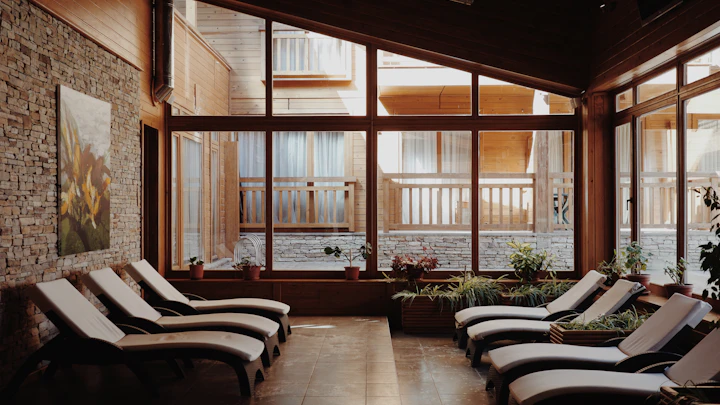
Photo: Virginia Marinova on Unsplash
Luxury property used to compete on marble lobbies, views and infinity pools. Now a growing number of developments compete on something harder to define: health. Brochures promise "longevity residences", "wellness sanctuaries" and homes designed to help you live longer.
The demand is real. The risk is that many projects market the idea of longevity far more convincingly than they deliver it, and buyers find out the difference when they try to resell.
The size of the shift
The Global Wellness Institute (GWI) estimates that the wellness real estate market reached $876 billion in 2025, up from $246 billion in 2019, and projects it to "more than double to $1.8 trillion by 2030", according to its May 2026 release. Its Global Wellness Economy Monitor 2026 puts growth at 23.2% between 2024 and 2025, describing the market as 3.5 times its 2019 size.
The wider longevity economy is attracting attention too. UBS has written about longevity-related spending reaching global annual sales of about $8 trillion by the end of this decade, in a 2025 note on investing in the theme.
The luxury property industry has noticed. Robb Report Malaysia quoted Brad Nelson, chief marketing officer of Sotheby's International Realty, describing wellness as "the organising principle" of luxury homes rather than an amenity, in a June 2026 article.
Is there a price premium?
There is evidence that healthier homes can sell for more. GWI's Build Well to Live Well research, based on a review of more than 300 studies, found that wellness homes in the middle and upper parts of the market can command a price premium of 10 to 25%.
Two cautions matter here. That premium applies to wellness homes broadly, not specifically to buildings branded as "longevity" projects. And a premium at launch is not the same as a premium at resale, which is the question we explored for branded residences.
The trap: selling longevity once
The weak version of a longevity residence looks like this. A developer fills a shared floor with eye-catching equipment, such as cold plunges, infrared saunas, red-light beds or hyperbaric chambers, markets the building as a longevity haven, prices units accordingly and hands over to the owners' association.
The problems tend to appear after handover:
- Equipment needs expertise. Some of these machines need specialist servicing, trained staff and clear protocols. Without an operator, they can become a maintenance cost and a liability rather than a benefit.
- Service charges rise. Owners, not the developer, end up paying to run and replace the equipment.
- Second buyers ask harder questions. A resale buyer is less excited by the launch brochure and more interested in running costs, what is actually used and what evidence supports the health claims.
- Gadgets can't fix the basics. A recovery suite in the basement doesn't help much if the flat itself is noisy, poorly ventilated or full of materials that release pollutants.
The underlying mistake is treating longevity as an amenity to sell rather than a service to operate.
What a credible wellness home looks like
1. Health built into the building, not added to it
The most durable health features are the ones residents benefit from without thinking about them: good ventilation and air filtration, effective sound insulation, daylight, water quality and low-emission materials. These are harder to photograph than a cryotherapy chamber, but they affect daily life in every unit.
2. Independent certification instead of adjectives
Third-party building standards give buyers something to check. The WELL Building Standard certifies projects at four levels (Bronze, Silver, Gold and Platinum), and Fitwel awards one to three stars. Neither proves a building will make anyone live longer. Both are more meaningful than "curated wellness" in a brochure.
3. A real operating partner for anything clinical
If a development offers health services, the important question is who runs them, under what licence and for how long. Some projects have signed partnerships with established providers. Velvaere, a wellness-focused community at Deer Valley in Utah, partnered with Fountain Life for preventive care, as announced in 2023. Tri Vananda in Phuket is a wellness community on a large, mostly natural site, with a Clinique La Prairie health resort due to open there, according to its official site.
Partnerships like these are only as good as their terms. Buyers should ask how long the agreement runs, what residents pay and what happens if the partner leaves.
4. Services paid for by the people who use them
Optional clinical, nutrition or recovery services work better as separate memberships or pay-as-you-go than as costs bundled into everyone's service charge. That keeps running costs predictable for owners who don't use them, which matters at resale.
Be careful with health claims
Some wellness marketing drifts into claims that the evidence doesn't support. One example is "low-EMF bedrooms" sold as a sleep or health benefit. The World Health Organization's guidance on electromagnetic fields says scientific evidence does not support a link between symptoms such as headaches or sleep problems and exposure to everyday electromagnetic fields.
The same caution applies to lighting that claims to "boost hormones", or materials that promise to lower stress. Good daylight and thoughtful lighting design are worth having, but marketing should describe what a feature does rather than imply medical outcomes. In many markets, health claims in property advertising can also attract regulatory attention.
Questions buyers should ask
- Which health features are built into each home, and which are shared amenities?
- Does the building hold a recognised certification, and at what level?
- Who operates any clinical or recovery services, and for how long is that agreed?
- How much of the service charge goes on wellness facilities, and how might that change?
- Are optional services billed separately to the people who use them?
- What evidence supports each health claim in the marketing?
- If the equipment were removed tomorrow, would the home still be healthier to live in?
How developers should market wellness homes
- Lead with the fundamentals. Air, light, sound, water and materials are the strongest story because they are real in every unit.
- Show the proof. Certifications, test results and named operating partners do more than adjectives.
- Be specific about costs. Clear service charges build trust with both first and second buyers.
- Avoid medical promises. Describe features accurately and let buyers draw their own conclusions.
- Plan for the second buyer. The same thinking applies to any premium property sold on lifestyle; we covered the resale angle for fractional holiday homes too.
Wellness that lasts
The longevity label will sell some homes quickly. The developments that hold their value will be the ones where health is built into the structure, backed by credible partners and described honestly. A wellness home should still make sense to the second buyer, long after the launch brochure has been forgotten.
Marketing a premium property and want positioning that holds up to scrutiny? AgniCorp Media helps developers and luxury brands build credible, long-term brand strategies.

Devv Bairaagi is Principal Strategist at State of Marketing and co-founder of AgniCorp Media, where he leads strategy. His background spans Hyundai, WorkIndia and the United Nations. How we write and review articles.