The Attribution Trap Inside Retail Media's $200 Billion Growth
Retail media spend is heading past $200 billion, but buyers trust the reported numbers less each year. What the 2026 measurement data shows, why network ROAS overlaps, and how to test what's really incremental.
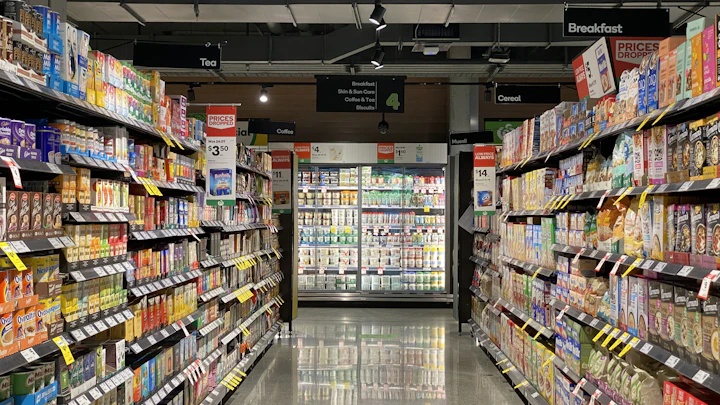
Photo: Franki Chamaki on Unsplash
The pitch for retail media was simple. Put your ads where people are already shopping, and measurement should be clean, because the ad and the sale happen on the same platform.
The spending has followed that pitch. The measurement hasn't kept up, and the people buying the ads are starting to say so.
How big retail media has become
WARC Media expects global retail media spend to reach $200.4 billion in 2026 and $223.4 billion in 2027, although it also expects growth to slow.
In the United States, the IAB and PwC report put commerce and retail media revenue at $53.7 billion in 2024, up 23% on the year before. eMarketer's forecast, as quoted by Brij, is roughly $69.33 billion for 2026. The two figures measure slightly different things, so don't compare them as if they were one series.
India is growing quickly from a smaller base. Media Partners Asia, as cited in this roundup, names India as the fastest-scaling retail media market in Asia Pacific, at a 16.4% compound annual growth rate. Amazon and Flipkart run the biggest retail ad businesses here, and the quick-commerce apps (Blinkit, Zepto and Swiggy Instamart) all sell sponsored placements of their own.
Why it looked like the cleaner channel
A person searching for detergent on a shopping app is much closer to buying than someone scrolling a social feed. And after Apple's privacy changes in 2021 made off-platform tracking harder, retail media looked like a safe option built on first-party data: reach shoppers where they buy, and use transaction data to close the loop.
That reasoning is sound as far as it goes. The trouble starts when a brand buys on several networks at once, and when retail media moves beyond search listings.
What the 2026 measurement data shows
Few advertisers think they measure it well. In a survey of 166 retail media advertisers by Skai and Stratably, published in February 2026, only 15% said their organisation was very or extremely effective at measuring retail media performance. Asked about their biggest measurement challenges, 75% picked incrementality (whether the sale would have happened without the ad) and 59% picked cross-channel measurement.
European buyers are moving past ROAS. IAB Europe's Attitudes to Retail Media Report 2026, published on 3 November and summarised by PPC Land, surveyed 150 people (91 buyers and 59 sellers). Some findings:
| Finding | 2025 | 2026 |
|---|---|---|
| Buyers asking networks for return on ad spend | 89% | 49% |
| Buyers naming lack of measurement and reporting as a barrier | 48% | 61% |
| Buyers naming lack of available data as a barrier | 31% | 58% |
Read the first row carefully. Buyers could pick several metrics, the 2026 list of options was longer, and the European buyer base for that question was only 35 people. The report itself says the longer list may partly explain the fall, and it calls the rise in the measurement barrier directional rather than statistically significant. The jump in "lack of available data" is the firmer finding.
The direction is still clear. Jason Wescott of WPP Media, who chairs IAB Europe's Retail and Commerce Media Committee, put it this way: "Buyers are outgrowing ROAS." The report also found that 58% of buyers want multi-touch attribution, while only 31% of sellers say they offer it.
Where the attribution overlaps
Each network grades its own work
Most retail networks report sales against their own ads, inside their own dashboards. Suppose a shopper sees a sponsored listing on Flipkart, then a Meta ad, then buys a few days later. The retailer's report can credit its campaign, and Meta's report can credit Meta's. Add the claims up across channels and you can easily credit more sales than actually happened. We haven't seen a reliable published figure for how large that overlap typically is, so measure your own.
The windows don't match
Attribution windows differ by network and even by ad type. On Amazon, for example, third-party guides such as this one from Amalyze describe a 7-day window for sellers' Sponsored Products and 14 days for vendors' Sponsored Products and for Sponsored Brands and Sponsored Display. Check the current settings in each console rather than relying on any blog, including this one. A 14-day report and a 7-day report aren't measuring the same thing.
New formats break the closed loop
Retail media started as sponsored listings in search results. It now includes display ads, off-site programmatic, shoppable video and connected TV. The further the ad sits from the shopping page, the less the "same platform, clean data" argument applies.
Some of the credit was never at risk
A shopper who searches for your brand by name and clicks a sponsored listing at the top was probably going to buy anyway. Repeat buyers, items already in the basket and loyal brand searchers can all flatter a reported ROAS. That's why incrementality testing matters: it shows what changed because of the ad.
Priorities are moving. A Koddi study by Forrester Consulting, as reported by Brij, found 86% of commerce media decision-makers in North America and Europe rate stronger measurement and attribution as a high or critical priority. Calling it a priority is easier than building it.
The India picture
Indian brands face the same problems, with more platforms to juggle. A consumer brand advertising on Amazon, Flipkart and three quick-commerce apps works with five dashboards, five sets of definitions and very different reporting depth. None of them line up neatly.
Quick commerce adds another wrinkle. A lot of quick-commerce buying is habitual: people reorder the same milk, bread and snacks. Sponsored placements can capture those purchases without creating many new ones. That doesn't make the ads worthless, but it makes a holdout test even more valuable.
Many brands still judge these platforms on the ROAS each one reports, because it's the only number they have. That's understandable. It just isn't a measure of growth.
How to measure retail media better
You don't need a new technology platform to start. You need a few process changes.
1. Run a holdout test each quarter. Pick one campaign. Withhold the ads in a comparable set of cities or pin codes, or switch them off for a period, and compare sales with the areas or weeks where they ran. Some networks offer their own lift studies, which are worth using too, but keep one test you designed yourself.
2. Compare networks on cost per incremental sale. Once you have holdout results, work out what each extra unit cost you. Reported ROAS figures from different networks use different windows and rules, so they don't compare well. A cost per incremental unit from your own tests does.
3. Split defence from growth. Ads on your own brand name protect demand you already have. Ads that put a new product in front of category shoppers are trying to create demand. Give them separate targets and report them separately to leadership, because one benchmark can't judge both.
4. Audit the attribution settings before the next budget round. List every network you buy, its window, whether it counts views or only clicks, and what it calls a conversion. It's tedious, and it often explains why the numbers don't reconcile.
5. Keep your own record. Track total sales by platform and region alongside ad spend in a sheet you control, so you can see whether the business grows when ad spend grows. Our ROAS calculator and ad metrics guide cover the basics, and our piece on LinkedIn's attribution gap shows the same problem in B2B.
Keep spending, but check the maths
Retail media isn't going away. The inventory sits right next to buying decisions, and the transaction data is genuinely useful. So keep the budget, and stop treating each network's report as the final word on what it achieved.
Brands that run their own tests will know which placements create sales and which mostly collect credit. That's worth more than any single dashboard number.
Not sure what your retail media budget is really adding? AgniCorp Media helps brand and performance teams set up measurement that separates real growth from attributed sales.

Devv Bairaagi is Principal Strategist at State of Marketing and co-founder of AgniCorp Media, where he leads strategy. His background spans Hyundai, WorkIndia and the United Nations. How we write and review articles.