B2B Influencer Marketing: Why Always-On Programs Outperform Campaign Bursts
Most B2B marketers now work with influencers, but far fewer report outstanding results. What the research says about always-on programs, co-creation and measurement, and a practical way to build an influencer programme tied to pipeline.
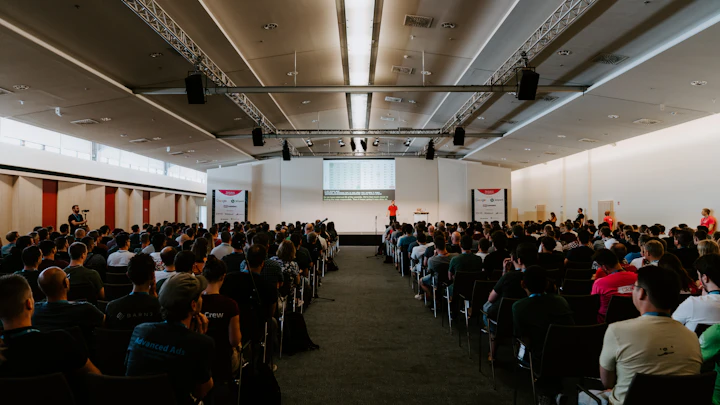
Photo: Claudio Schwarz on Unsplash
B2B influencer marketing has gone mainstream fast. In TopRank Marketing's research, 85% of B2B marketers were working with influencers in its previous report, up from 34% in 2020.
Results haven't kept pace with adoption. In TopRank's 2025 B2B Influencer Marketing Report, 43% of all respondents reported outstanding results, a figure that rose to 79% for marketers with mature programmes. One of the biggest differences between the two groups is structural: whether the programme runs all year or in short campaign bursts.
A note on sources: TopRank and Spotlight, the two main sources here, both sell influencer marketing services, so they have an interest in the topic. Their figures are still among the most detailed available on B2B influencer programmes.
Why so many B2B programmes run as campaigns
Category experts with engaged audiences on LinkedIn, YouTube, podcasts and niche communities have become a credible way to reach B2B buyers, who pay attention to what people they already follow say about their field.
Most programmes are still organised like advertising campaigns, with a brief, a set of deliverables, a launch date and an end date. That makes them easy to approve and report on, and it creates two problems.
The first is measurement. TopRank's statistics roundup found that 47% of B2B influencer marketers cite measuring and reporting results as a top challenge, second only to identifying, qualifying and connecting with the right influencers (48%). When a programme runs for three weeks and a B2B deal takes months to close, the campaign report is filed long before any resulting pipeline appears.
The second is timing. Most people who see an expert's post are months away from buying, and are still forming views about which vendors seem credible and worth a closer look later. If a brand's influencer partners posted for a few weeks in the first quarter and then went quiet, the brand may be absent when those people start an active evaluation months later.
What the always-on data shows
TopRank's research points to one approach that separates stronger programmes from weaker ones:
- Marketers who don't use an always-on approach are 17 times more likely to report that their programme is somewhat or very ineffective.
- 99% of teams using an always-on approach rate their programmes as effective.
- 82% of the marketers reporting the most success use always-on.
- Overall, 58% of B2B marketing teams use it.
An always-on programme keeps a small group of influencer relationships running throughout the year. Influencers hear about positioning, research and product changes as they happen, and their content appears steadily over the year instead of in one concentrated burst.
These are survey findings, so they show an association rather than proof that always-on causes better results. Teams that run always-on programmes may also be more experienced or better resourced. Still, the pattern fits how B2B buyers gather information: slowly, over months, from sources they come to trust.
LinkedIn's own research points the same way. In its 2026 B2B Marketing Outlook, a YouGov survey of 1,299 B2B marketers in the US, UK, France, Germany and India, 82% of B2B marketers who work with creators agreed that influencer campaigns are essential to deliver measurable ROI, and 81% said pulling back from creators would mean leaving revenue on the table.
Where B2B influencers prefer to work
Spotlight's 2026 B2B Influencer Marketing Report, based on its own surveys of influencers and practitioners in early 2026, asked B2B influencers to rank channels. LinkedIn came first, with an average rank of 1.4, followed by brand websites (3.3), YouTube (3.8) and podcasts (4.0). Instagram ranked 5.7 and TikTok 7.5.
For a brand, that's a useful guide to where expert voices in its category are likely to be most active. It's also a reason to judge partners by the depth of their professional audience rather than their total following across platforms.
Why co-creation needs a longer relationship
Spotlight found that 86% of B2B influencers prefer to co-create content with brands, while only 14% prefer to amplify finished brand content.
Amplification, where the brand hands over a finished asset and asks the influencer to share it, is quick to run and easy to approve. Audiences tend to recognise it for what it is. Co-creation asks the influencer to bring their own view to the brand's ideas, which needs them to understand the brand's positioning, customers and product. That understanding takes time, and a three-week campaign rarely allows it. We looked at bringing creators in earlier in the co-creator gap.
Finding the right people is hard too: 44% of practitioners in Spotlight's research said finding the right talent is their single biggest obstacle to collaboration. Once a brand has found a good fit, ending the relationship after one campaign wastes that effort. The same pattern shows up in consumer creator marketing, which we covered in the rebook gap.
Why measurement stops too early
Spotlight's practitioner survey found that 89% track engagement rates, 67% track lead generation and 33% track direct sales impact.
Engagement is the easiest number to collect, so it becomes the default. Pipeline needs longer tracking. If a buyer sees an expert's post in March and signs a contract in October, a 30-day attribution window won't connect the two. Linking them requires consistent link tagging, attribution windows that match your sales cycle, and a CRM set up to record influencer touches across the deal. For the wider problem, see the dark funnel and our guide to self-reported attribution.
How to build an always-on B2B influencer programme
1. Choose a small, relevant group
Start with five to eight people whose audiences include your target buyers. Relevance matters more than reach: an expert followed by a few thousand practitioners in your category can be worth more than a generalist with a much larger following.
2. Brief on positioning and let them shape the posts
Share your positioning, the buyer problems you solve, and any new research or customer stories. Let each person decide how to bring that into their own content and schedule, with clear disclosure of the partnership. Avoid scripting specific messages for specific dates.
3. Meet regularly
A short call every quarter keeps each relationship current and gives you a chance to share what's new. Regular, two-way contact is what separates a working partnership from a retainer nobody uses.
4. Track over the full sales cycle
Tag every link, record influencer touches in your CRM and set lookback windows that match how long your deals take. Add an open "How did you hear about us?" question to your forms to catch influence that links miss.
5. Measure at the pipeline level
Engagement is a useful early signal. The numbers that matter more are pipeline influenced by partner content, win rates for influenced opportunities against others, and deal speed where influencer touches appear.
6. Renew partnerships that work
If a partner is still relevant to your buyers and the work is going well, renew by default rather than starting from scratch with someone new.
The short version
Most B2B marketers now work with influencers. The programmes that report the strongest results tend to share three traits: they run all year, they let experts co-create, and they measure over the length of a real sales cycle. For many teams, the next improvement is a change of structure, from campaigns to ongoing partnerships, more than a change of budget.
Want a B2B influencer programme tied to pipeline? AgniCorp Media helps B2B teams build creator and expert partnerships that run all year and connect to measurable results.

Devv Bairaagi is Principal Strategist at State of Marketing and co-founder of AgniCorp Media, where he leads strategy. His background spans Hyundai, WorkIndia and the United Nations. How we write and review articles.