Why B2B Buyers Trust Your Founder More Than Your Brand
Trust in named leaders runs ahead of trust in institutions, AI-made content is eroding brand voice, and hidden buyers judge vendors on expertise. What the 2024 to 2026 research says about founder-led marketing, and how to do it well.
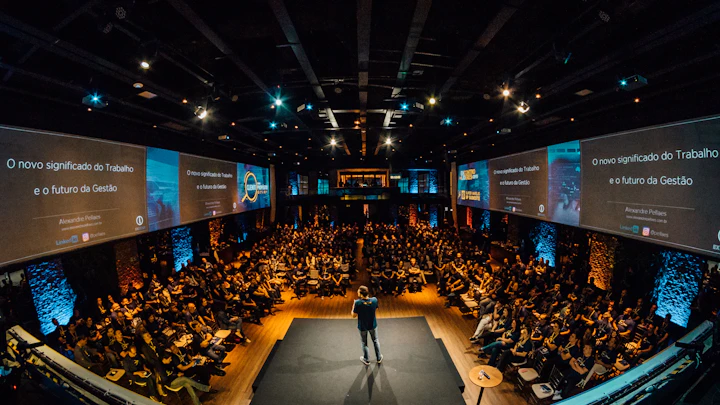
Photo: Alexandre Pellaes on Unsplash
Think about the last time you chose a B2B supplier for something important. Did you trust the logo, or did you trust the people behind it: someone whose thinking you'd read, whose judgement you'd seen tested in public, who seemed to know your problem?
For most buyers it's the second. And a growing body of research suggests the gap between trusting institutions and trusting named people is widening, at the same moment that AI-generated content is making corporate voices harder to believe.
This article looks at what that research says, why it changes how B2B brands should think about trust, and how to build founder-led authority without turning your CEO into another source of generic posts.
People are trusted more than institutions
The 2026 Edelman Trust Barometer, based on nearly 34,000 respondents in 28 countries, found that 64% of people trust business as an institution, while 66% trust "my CEO", the leader of their own organisation. The difference is small, but it points in a consistent direction: familiarity with a specific person creates trust that an institution struggles to earn on its own.
Younger audiences are harder still. Morning Consult's 2026 brand trust analysis, covering more than 3,200 brands, found that 94% of them score lower on net trust with Gen Z than with US adults overall, by about 8 points on average. As those buyers move into decision-making roles, the trust deficit for faceless brands moves with them.
AI content is wearing down the corporate voice
The second pressure is volume. A great deal of what brands publish now reads as automated, and audiences notice.
- LinkedIn: Originality.ai's July 2026 tracker classified 75.6% of a sample of 123 long-form LinkedIn posts as likely AI-generated. It's a small sample, but it matches what most people see in their feeds.
- Consumers: a Gartner survey of 1,006 US consumers found 65% think brands produce too much AI-generated content in their marketing, and 57% say it has made them less trusting of brand messaging overall.
- Authenticity: Clutch's 2026 survey of 408 US consumers found 93% say it matters that brand communications feel like they came from a real person, and 55% view a brand less favourably once they can tell AI produced the creative.
These are consumer studies rather than B2B ones, but the instinct carries over. When a company's content sounds like everyone else's, buyers can't tell whether there's a real point of view behind it. A recognisable logo with no visible perspective gives them little to trust.
Why named experts earn more trust
Trust in business usually comes down to accountability. We trust people more when they have something to lose by being wrong.
A corporate brand spreads that risk thin. If a company publishes something mistaken, a statement goes out and the cycle moves on. A founder or senior expert who puts their name to a clear position takes a personal reputational risk. Buyers read that as a signal: this person believes it enough to be held to it.
B2B research reflects this. The Edelman-LinkedIn 2024 B2B Thought Leadership Impact Report, based on nearly 3,500 professionals in seven countries, found:
| Finding | Share |
|---|---|
| Say thought leadership is a more trustworthy basis for judging a company's capabilities than its marketing materials | 73% (up from 59% in the 2020 study) |
| Would be moderately or very likely to invite a company with strong thought leadership into an RFP | 86% |
| Of decision-makers and C-suite leaders, willing to pay a premium to a supplier with strong thought leadership | 60% |
| Rate the overall quality of the thought leadership they read as very good or excellent | 15% |
The last line matters as much as the first three. Buyers value thought leadership highly but rate most of it poorly. The bar for standing out is lower than the volume of content suggests, as long as what you publish is genuinely useful.
The hidden buyers your brand campaign never reaches
Most B2B deals involve people the vendor never meets: finance, legal, procurement, IT security and senior leaders who don't attend demos but can veto a decision. Edelman and LinkedIn's 2025 study, based on nearly 2,000 professionals, looked at these "hidden buyers" directly.
- 71% of hidden buyers say thought leadership is more effective than traditional marketing or sales materials at showing a vendor's potential value.
- 95% of hidden buyers say strong thought leadership makes them more receptive to sales and marketing outreach.
- Across decision-makers generally, 53% say that when a company's thought leadership is strong, brand recognition matters less.
Hidden buyers rarely sign up for webinars or click retargeting ads. They search for names, read what the people involved have written and form a view before anyone puts them in a CRM. Published expertise from named people is one of the few things that reaches them.
Trust is set before the pipeline exists
The timing makes this more important. 6sense's 2025 Buyer Experience Report, drawing on 3,744 buyers who made purchases of at least $25,000, found the winning vendor was already on the day-one shortlist 95% of the time, and first contact with sellers came about 61% of the way through the journey. (We've looked at what this means for sales teams in Your Outbound Is Arriving Too Late.)
Two more 6sense findings sharpen the point. In 2025, 94% of buyers said they used AI assistants such as ChatGPT at some point in their buying journey. And buying groups said they already knew 75% of the vendors on their shortlist, up from 69% a year earlier.
Preference forms early, from accumulated impressions, and increasingly through research tools that surface clear, attributable expertise. A company whose people say nothing distinctive in public has little to show up with.
Why personal authority compounds
Company brand presence tends to fade when you stop paying for it: pause advertising and the attention moves to whoever keeps showing up. Personal authority behaves differently. A founder who has published sharp, specific analysis for a year or two has built a library that keeps being found through search, AI summaries and recommendations long after each post goes out.
It also travels further. LinkedIn data reported by Social Media Today puts employees' combined networks at about 12 times a company's own following, and says nearly six in ten buyers discover new brands through creator content. The company page is rarely where trust starts.
And it works on existing customers too. In the 2024 Edelman-LinkedIn study, around 70% of C-suite leaders said a piece of thought leadership had made them question whether to keep working with a current supplier, and a quarter of buyers who questioned a supplier went on to end or significantly reduce the relationship. Your competitors' experts can unsettle your customers, and yours can reassure them.
Where founder-led marketing goes wrong
The usual response to this evidence is "we need our CEO on LinkedIn". That's a channel decision, and the real problem is positioning.
Many founder programmes simply move corporate messaging into a personal account: the same broad topics, the same approved phrasing, with a human photo attached. Buyers spot it quickly. What builds authority is a specific, defensible point of view, ideally one that names a problem buyers feel but haven't seen described clearly. That requires real conviction, not a content calendar written for the founder.
Edelman's April 2026 CEO research points the same way: 67% of respondents preferred leaders who speak directly to the public without anyone editing or rewriting their words, against 33% who preferred reviewed messages. Meanwhile, the TopRank Marketing and Ascend2 2026 study of 797 senior B2B marketers found 97% call thought leadership critical to full-funnel success, but only 43% use it beyond acquisition to engage and retain existing customers.
How to build founder authority that works
1. Keep the founder's voice out of the corporate approval chain. Check founder content for legal risk and factual accuracy, and leave the rest alone. Every extra review round sands off the edge that makes personal content credible.
2. Choose a narrow conviction, not a broad topic. "Thought leadership on SaaS go-to-market" is a category. "Pipeline coverage ratio is the wrong measure of go-to-market health, and here's what to track instead" is a position. Buyers follow positions. (We go deeper on this in The Generalist Trap.)
3. Write about the problems buyers don't see discussed. Look for what your customers say privately but rarely read in public, and publish your honest view on it. Since only 15% of buyers rate what they read as excellent, specific and useful work stands out quickly.
4. Measure it as pre-pipeline trust. Ask every new customer how they first heard of you and how long they'd followed your founder or experts before getting in touch. Track how many closed deals involved someone who already knew your people's thinking. That shows how much of your pipeline comes from personal authority versus paid presence.
5. Use it for retention as well as acquisition. Share the founder's thinking with existing customers through newsletters, account reviews and events. Customers who keep seeing evidence that your team understands their world are harder for competitors to unsettle.
6. Build more than one voice over time. Start with the founder, then add one or two senior specialists with real expertise. Several credible voices reach more hidden buyers than one, and reduce the risk of everything depending on one person.
What it adds up to
The usual B2B debate pits brand against performance. The more useful question is whether your company's expertise is attributed to real people buyers can follow and trust.
Company brand still matters. It reduces friction, supports pricing and makes every other channel work harder. But in long B2B buying cycles with buying groups you never meet, recognition alone doesn't win the shortlist. What tips it is whether someone with real expertise has been willing to take a clear, public position on the buyer's problem, long before the buyer got in touch.
(For the early stages of this, see how B2B buyers judge your personal brand before the first meeting.)
Building founder-led authority for a B2B company? AgniCorp Media helps founders and senior experts find a clear point of view and publish it consistently.

Devv Bairaagi is Principal Strategist at State of Marketing and co-founder of AgniCorp Media, where he leads strategy. His background spans Hyundai, WorkIndia and the United Nations. How we write and review articles.