The Lab-Grown Margin Trap: What Falling Diamond Prices Mean for Jewellery Brands
Lab-grown diamonds now dominate US engagement rings, but wholesale prices have collapsed. Why selling on carat-per-rupee is a weak position, and how jewellery brands can build value that doesn't fall with the stone.
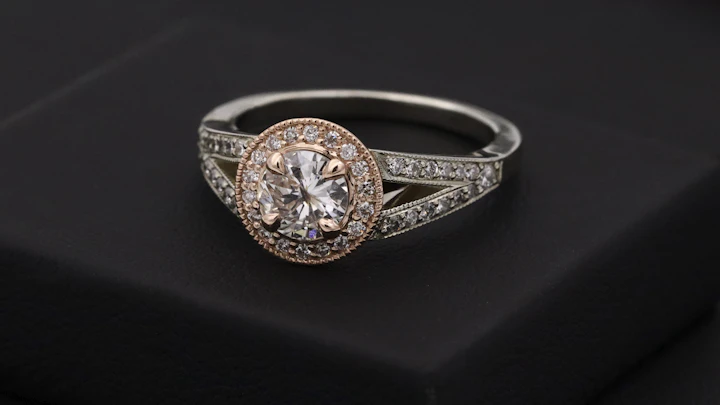
Lab-grown diamonds have won the argument with shoppers. In The Knot's 2024 Jewelry & Engagement Study, 52% of US engagement rings had a lab-grown centre stone, up from 46% a year earlier, and its later study of couples married in 2025 put the figure at 61%. They're chemically the same as mined diamonds, far cheaper, and increasingly normal.
For the brands selling them, the picture is less comfortable. The same thing that makes lab-grown stones attractive (they can be made in a factory) is pushing their prices down year after year. A brand built on "a bigger stone for less" is building on a price that keeps falling.
How far prices have fallen
Lab-grown wholesale prices have dropped dramatically. Diamond analyst Edahn Golan's wholesale index is down about 96% since he began tracking it in 2018, and by the end of 2025 prices across many sizes had converged near $100 a carat in the Surat and Mumbai trade. The fall has slowed but not stopped: his figures show prices down about 14% year on year in the first quarter of 2026 and about 13% in the second.
The reason is simple. Lab-grown diamonds are a manufactured product. As reactor capacity grows and the technology improves, each stone costs less to make, and the market is full of competing producers. Even De Beers stepped back: it announced in May 2025 that it would close its Lightbox lab-grown jewellery brand.
Natural diamonds haven't been immune either, which is often left out of this story. Polished natural prices on the IDEX index fell roughly 45% from their March 2022 peak by the end of 2025, and De Beers cut its 2026 production guidance to 21 to 26 million carats. The whole diamond market is under pressure. Lab-grown prices have simply fallen much further and faster.
Why this squeezes brands
Percentage margins hide shrinking rupee margins. A jeweller can keep a healthy markup in percentage terms while the gross profit per sale falls, because the stone underneath is worth less every quarter. Meanwhile the cost of winning a customer through ads doesn't fall at all. When the profit per order shrinks and acquisition costs don't, the maths stops working.
Inventory loses value on the shelf. If you buy stones today and a competitor buys the same quality next quarter for less, they can undercut you. Holding lab-grown stock for long is a risk in itself.
The "forever" story gets harder to tell. Fine jewellery has always been sold partly on permanence. If a buyer later finds the same ring for much less, or tries to sell it, the emotional promise can sour. There's little established resale market for lab-grown stones, and many jewellers won't buy them back. (We couldn't find reliable figures for typical resale values of either type, so we won't quote any.)
India's place in this
India sits at the centre of the lab-grown story. The government backed the sector in the 2023 Budget, removing customs duty on lab-grown diamond seeds and funding a research centre at IIT Madras. Exports have grown in volume while falling in value: in the year to March 2026, India's lab-grown export volume rose 31% while polished export value fell about 11%, and by early 2026 lab-grown exports had overtaken natural diamonds by volume.
That's the margin trap at a national scale: more stones, less money per stone. For Indian D2C jewellery brands, it's a warning against building the brand on the price of the stone.
Three positioning mistakes to avoid
Selling only on size per rupee. "Three carats for the price of one" brings in buyers who'll switch for the next better deal. It also ties your brand to a number that keeps getting worse.
Matching every price cut. Following competitors down can turn fine jewellery into fast fashion. Once you factor in insured shipping, payment fees and returns, low-priced orders can lose money even when they look profitable.
Overstating the eco story. Calling lab-grown diamonds automatically "sustainable" is risky. Their footprint depends heavily on the electricity used to grow them. Estimates prepared for the Natural Diamond Council (an interested party) put the footprint of a polished carat grown on India's grid at around 612 kg of CO2 equivalent, and far lower with renewable power. In the US, the FTC has warned jewellery marketers against unqualified claims like "eco-friendly" and "sustainable". If you make an environmental claim, be specific and able to back it up.
Where value can come from instead
The stone is becoming a commodity. The brand has to be built on something that isn't. A few options, which work for both lab-grown and natural jewellers:
Design and craft
A ring's value can sit in its design, setting and finish as much as in the stone. Solid, well-made settings, distinctive designs and visible craftsmanship are harder to undercut than carat weight. Make the work visible: show the process, name the craftspeople, and explain what goes into a piece.
Customisation with low risk for the buyer
Custom design gives a reason to buy from you rather than the cheapest listing. Some brands reduce the hesitation of buying online by sending a printed replica or try-at-home sample of the design before casting, an approach that also works well in other high-consideration categories (we covered a similar idea in selling the sample first). Track whether it lowers your own return and exchange rates.
Honest pricing and clear labelling
Be clear about what the stone is and how its price is likely to behave. A brand that tells customers lab-grown stones are beautiful, durable and not an investment earns more trust than one that implies otherwise. Clear certification and labelling also matter for regulators and for reviews.
Lifetime service
Free cleaning, resizing, re-polishing and repair keep customers coming back and give the brand a relationship beyond the first sale. Any upgrade or exchange programme should be priced from your own margins, and written down clearly, so it's a promise you can keep even if stone prices keep falling.
Provenance, where it's real
For natural diamonds, traceability is becoming a selling point. Platforms such as De Beers' Tracr and Sarine record a stone's journey from the mine. If you sell natural stones, documented origin is something a factory product can't offer. Don't claim more than the paperwork shows.
These ideas connect with themes we've covered before: how luxury brands protect value after the first sale, the premium paradox and what a brand pays for competing in someone else's category.
Ten questions for jewellery founders
- What's our gross profit per order in rupees, not just as a percentage?
- How has that rupee figure changed over the last four quarters?
- How long does our stone inventory sit before it sells?
- What share of our marketing talks about size and price, and what share about design, craft or service?
- Are our environmental claims specific and backed by evidence?
- Do our product pages say clearly whether a stone is lab-grown or natural, and what that means for resale?
- What's our return and exchange rate, and why do customers return pieces?
- Do we offer anything after the sale that a cheaper competitor doesn't?
- If we sell natural stones, can we document where they came from?
- If stone prices halve again, is there still a reason to buy from us?
Build on what doesn't deflate
Lab-grown diamonds aren't going away, and that's good news for many buyers. But the price of the stone will probably keep falling, so it can't be the whole brand. Jewellers who put their value into design, service, honesty and craft will have something to sell when the next price cut arrives.
Building or repositioning a jewellery or luxury brand? AgniCorp Media helps founders build positioning that holds its value.

Devv Bairaagi is Principal Strategist at State of Marketing and co-founder of AgniCorp Media, where he leads strategy. His background spans Hyundai, WorkIndia and the United Nations. How we write and review articles.